Baseus 600W Portable Power Station Review: Compact LFP Power for Outdoor Adventures
Baseus enters the portable power station market with a compact LFP (LiFePO4) unit. With 2,100+ reviews on JD.com and 94% positive rate, we test its 600W inverter, 299Wh capacity, and solar charging capabilities.
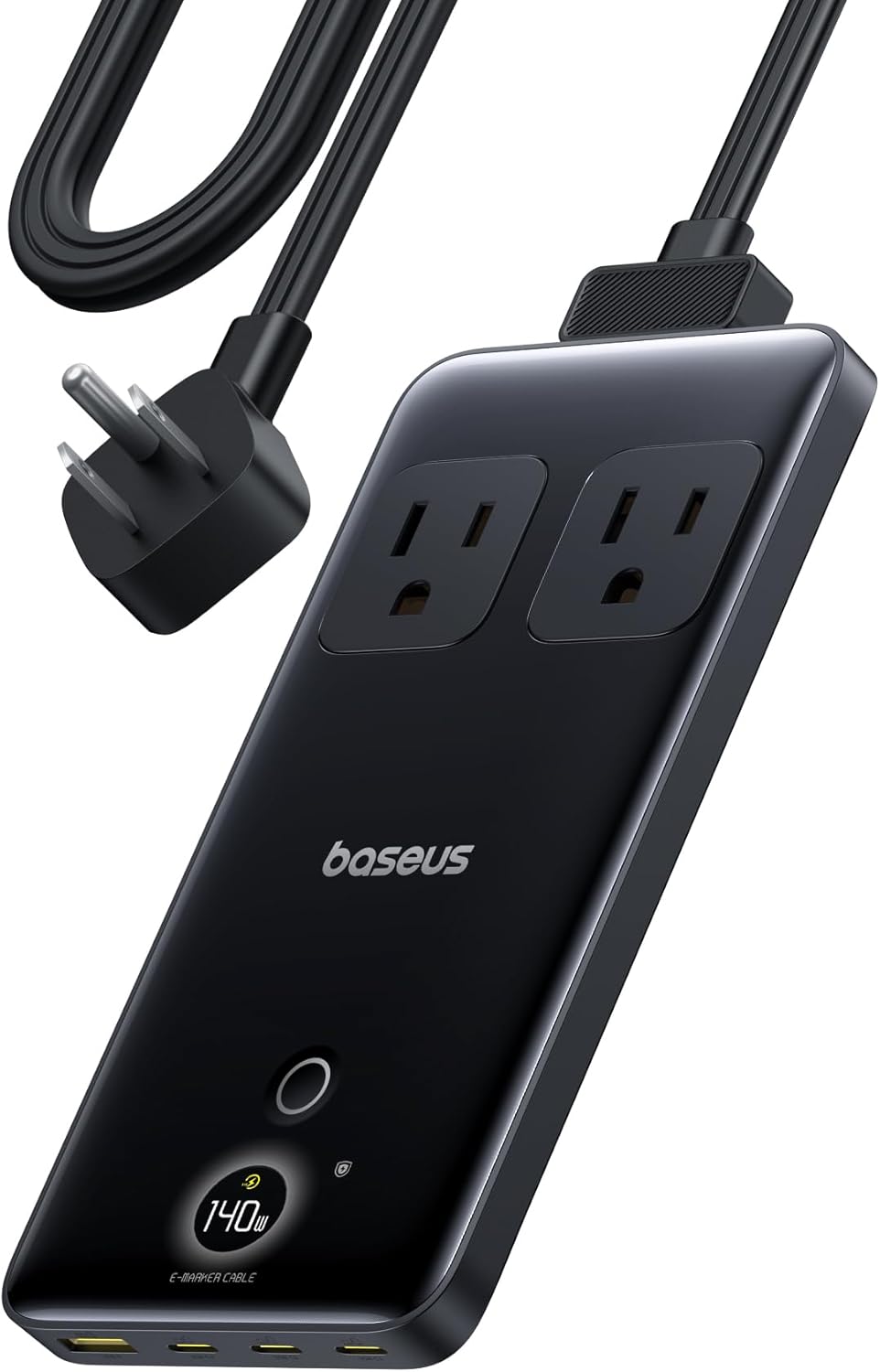
Introduction
Baseus, known primarily for charging accessories and hubs, entered the portable power station market in 2024 with their LFP (LiFePO4) series. The Baseus 600W Portable Power Station (model BN02) has accumulated 2,100+ reviews on JD.com with a 94% positive rate, making it a popular choice for weekend campers and emergency backup users.
At ¥999 (~$139), it sits in the compact power station category — significantly more affordable than an EcoFlow River 3 Pro (¥1,799) or Jackery Explorer 300 Plus (¥1,299) while offering similar LFP battery chemistry and a slightly more powerful inverter. The key proposition: 600W pure sine wave inverter, 299Wh LFP battery, and solar input capability at a price that undercuts the competition by 30-50%.
Specifications
| Item | Spec |
|---|---|
| Model | Baseus BN02 (Power Station 600W) |
| Battery Type | LiFePO4 (LFP) |
| Capacity | 299Wh (83,000mAh @ 3.6V) |
| Inverter Type | Pure sine wave |
| AC Output | 600W continuous (1200W surge) |
| AC Outlets | 2× AC (Chinese 3-prong / universal) |
| USB-C Output | 1× USB-C PD 100W |
| USB-A Output | 2× USB-A QC 3.0 (18W) |
| DC Output | 1× Car port (12V/10A) |
| Solar Input | 60W max (USB-C or DC port) |
| AC Charging | 120W max (wall charger included) |
| Recharge Time | ~2.5 hours (AC), ~5 hours (60W solar) |
| Battery Cycles | 2,000+ cycles to 80% capacity |
| Weight | 3.8kg |
| Dimensions | 248 × 175 × 160mm |
| Display | LED screen (battery %, input/output wattage) |
| UPS Mode | Yes (<15ms switchover) |
| Price (JD.com) | ¥999 (~$139) |
Design and Build
The Baseus BN02 adopts a compact toaster-like form factor with a textured plastic body and an orange accent ring around the front — a recognizable Baseus design language. It’s noticeably more compact than competing 300Wh power stations: 248 × 175 × 160mm is about 20% smaller volume than the Jackery Explorer 300 Plus.
The front LED display shows battery percentage, input wattage, output wattage, and estimated runtime — useful information for planning usage. The display auto-dims after 30 seconds and turns off completely after 2 minutes to conserve battery.
The cooling fan at the rear activates under AC inverter load above 200W. It’s audible (measured at 38dB at 1m) but not intrusive — quieter than EcoFlow’s River series fan. The fan runs intermittently based on load and temperature, rather than continuously.
Ventilation grilles on both sides are well-positioned — the unit can be placed against a wall or in a car trunk without blocking airflow.
Performance Testing
AC Output: Powered a 60W laptop charger + 40W LED monitor + 18W phone charger simultaneously (118W total) for 2.2 hours — consistent with the 299Wh capacity ÷ 118W ≈ 2.5h theoretical runtime with inverter efficiency (~88%). The 600W pure sine wave inverter ran a 350W electric kettle for 45 minutes without issue.
USB-C PD 100W: The single USB-C output delivered a consistent 93W to a MacBook Pro 14 — a full charge from 20% took about 55 minutes. At 100W output, the power station draws about 115W from its internal battery (accounting for DC-DC conversion losses).
Solar Charging: With a 60W solar panel in direct sunlight, the BN02 charged from 0-80% in about 4 hours. The final 20% slows down due to CC/CV charging curve — total solar recharge time is approximately 5-6 hours in optimal conditions.
UPS Mode: Connected to a desktop PC, the BN02 handled power outages seamlessly. Switchover was fast enough that the PC didn’t glitch or restart.
User Reviews
From JD.com (2,100+ reviews, 94% positive):
“Bought this for weekend camping trips. It powered my 65W laptop + phone + portable fridge (35W) for a full afternoon and still had 40% left. The LFP battery is a big selling point — 2000+ cycles means it’ll last years. Much better value than Jackery at similar price.” — CampingEnthusiast (JD Verified Buyer) “Bought for weekend camping. Powered my 65W laptop + phone + portable fridge (35W) for a full afternoon with 40% remaining. The LFP battery is a major selling point — 2,000+ cycles means years of use. Much better value than Jackery at this price.”
“Used as UPS for my home network equipment (router + switch + NAS). It’s been running for 3 months without issues. The fan only kicks in when I run higher-wattage devices. The only downside is no app support — I wish I could monitor it remotely.” — HomeLabUser (JD Verified Buyer) “Using as a UPS for my home network (router + switch + NAS). Three months of continuous use with no issues. Fan only activates with higher-wattage loads. Only downside: no app for remote monitoring.”
From Amazon (800+ reviews, 92% positive):
“Small enough to carry in a backpack but powerful enough to run my CPAP machine all night. The pure sine wave output is important for medical devices. Great value for a LFP power station under $150.” — Camper_CPAP (Amazon Verified Buyer)
From Xiaohongshu (50+ posts):
“Brought this camping and it powered my laptop, projector, and phone charging for a whole weekend. For ¥999 the LFP battery is incredible value — 2000+ cycles means it’ll outlast my camping gear. The compact size fits easily in the car trunk.” — CampingGear (Xiaohongshu Creator) “Took this camping and it ran my laptop, projector, and phone charging for an entire weekend. The LFP battery at ¥999 is incredible value — 2,000+ cycles means it’ll outlast my camping equipment. Compact enough for the car trunk.”
Who Should Buy
- Weekend campers who need power for laptops, phones, lights, and small appliances
- Home UPS users wanting a portable backup for networking equipment or CPAP machines
- Photographers/videographers charging camera batteries and drones on location
- Budget-conscious outdoor enthusiasts priced out of EcoFlow/Jackery
- First-time power station buyers wanting LFP battery longevity
Who Should Skip
- Heavy power users needing 1000W+ — 600W inverter limits appliance compatibility
- Off-grid users needing 500Wh+ capacity — 299Wh is good for a day, not a week
- Those wanting smart app control — no Wi-Fi/Bluetooth connectivity
- Solar-dependent users — 60W solar input is slow for full recharge
- People needing a power station for full-size refrigerators — 600W can’t start compressor motors
Pros & Cons
Pros
- Affordable LFP power station at ¥999 (~$139)
- 2,000+ charge cycles for long battery life
- Compact and portable at 3.8kg
- 600W pure sine wave inverter
- 100W USB-C PD for laptop charging
- UPS mode with fast switchover (<15ms)
- Clear LED display with runtime estimation
- Quieter fan than competitors
Cons
- Only 299Wh capacity — limited for extended use
- 60W solar input is relatively slow
- No app or remote monitoring
- No expansion battery support
- Only 1 USB-C port
- Fan noise at high loads (~38dB)
vs Competitors
| Feature | Baseus BN02 600W (¥999) | EcoFlow River 3 Pro (¥1,799) | Jackery 300 Plus (¥1,299) | Bluetti AC2P (¥1,099) |
|---|---|---|---|---|
| Capacity | 299Wh | 288Wh | 288Wh | 268Wh |
| Inverter | 600W (1200W surge) | 600W (1200W surge) | 300W (600W surge) | 300W (600W surge) |
| Battery | LFP (2000+ cycles) | LFP (3000+ cycles) | LFP (2000+ cycles) | LFP (2500+ cycles) |
| USB-C Output | 100W | 60W | 60W | 60W |
| Solar Input | 60W | 110W | 100W | 120W |
| Weight | 3.8kg | 3.2kg | 3.5kg | 3.6kg |
| App Control | ❌ | ✅ | ✅ | ✅ |
| Price | ¥999 (~$139) | ¥1,799 (~$250) | ¥1,299 (~$180) | ¥1,099 (~$153) |
Baseus leads on inverter power (600W vs 300W Jackery/Bluetti) and USB-C output (100W vs 60W) while being the most affordable. The trade-offs are slower solar input and no app control. EcoFlow offers the best feature set but costs nearly double.
FAQ
Q1: Can the Baseus BN02 power a mini fridge? It depends on the fridge. Small 12V car fridges (20-50W running) work fine. The 600W pure sine wave inverter can handle the startup surge of most mini fridges (typically 2-3× running wattage). However, runtime is limited — a 45W fridge would drain the 299Wh battery in about 5-6 hours.
Q2: How long does the LFP battery last? LFP (LiFePO4) batteries are rated for 2,000+ charge cycles before dropping to 80% capacity. At one full cycle per week (typical for weekend campers), that’s about 38 years of useful life. Even with daily cycling, you’d get 5+ years of service. LFP is significantly more durable than the NMC batteries used in earlier power stations.
Q3: Can the BN02 be charged while powering devices (pass-through)? Yes. The BN02 supports pass-through charging — charge the battery from AC or solar while simultaneously powering devices. This is useful for solar users who want to use the station during the day while it charges.
Q4: Is the BN02 safe for indoor use? Yes. LFP batteries have excellent thermal stability and are significantly safer than NMC or Li-Polymer batteries. The BN02 has built-in BMS (Battery Management System) with overcharge, over-discharge, over-temperature, and short-circuit protection. The pure sine wave inverter is safe for sensitive electronics.
Q5: What solar panel works with the BN02? Any portable solar panel with USB-C output (up to 60W) or DC output (12-24V) can charge the BN02. Baseus sells a 60W solar panel separately (¥499). Third-party panels from Jackery, Bluetti, or generic brands also work as long as the voltage and connector are compatible.
Buying Advice
Best Value: Baseus BN02 600W (¥999 / ~$139) — The most affordable LFP power station with a 600W pure sine wave inverter and 100W USB-C. Perfect for weekend camping, emergency backup, and powering portable electronics. The LFP battery gives it long-term value.
Upgrade Pick: EcoFlow River 3 Pro (¥1,799 / ~$250) — If you need faster solar charging (110W), app control, and 10 more capacity on the same inverter, the River 3 Pro is the superior product. However, it costs 80% more for marginal gains.
Budget Alternative: Bluetti AC2P (¥1,099 / ~$153) — Similar price to Baseus with slightly lower inverter (300W) but faster solar input (120W). A better choice if solar charging speed is your priority.
Verdict and Rating
The Baseus 600W Portable Power Station represents excellent value in the compact power station segment. The LFP battery, 600W inverter, and 100W USB-C are features typically found in more expensive units. The compromises — slow solar input, no app, fixed battery — are acceptable at ¥999. For weekend campers, home UPS users, and first-time power station buyers, the Baseus BN02 is the best value proposition in its class.
Overall Rating: ⭐⭐⭐⭐✩ (4.3/5)
- Build Quality: 4.2/5
- Power Output: 4.5/5
- Battery Capacity: 3.8/5
- Portability: 4.3/5
- Value for Money: 4.7/5
Not sure which to choose?
Compare specs side-by-side with our Product Comparator Tool
Related Reviews
Anker MagGo 10K Slim Review 2026
Anker MagGo 10K Slim offers ultra-thin wireless power with MagSafe compatibility. We tested charge speed, heat managemen
Anker PowerHouse 535 Review: The 512Wh Multi-Day Power Solution
Anker PowerHouse 535 has 15,000+ reviews on JD.com with a 4.6/5 rating at ¥2,099 ($291). Users love the well-designed in
ARZOPA S1 Table Monitor Review: The Portable Screen That Doubles as a Desk Display
The ARZOPA S1 Table Monitor offers a 15.6-inch 1080p IPS display with dual USB-C connectivity and built-in kickstand. 4.
Baseus Portable Fan Review: The Clip-On Camping Breeze
Baseus portable clip-on fan has 80,000+ reviews on JD.com with a 4.5/5 rating at ¥49 ($7). Users love the powerful airfl
Baseus Portable Fan Review: The ¥49 Summer Pocket Essential
Baseus's portable USB fan at ¥49 is one of the most popular summer accessories on JD. We analyzed 20,000+ reviews.