Redmi Pad SE 2 Review: The Budget Tablet That Actually Works
Redmi Pad SE 2 has 50,000+ reviews on JD.com with a 4.4/5 rating at ¥899 ($124). Users love the unbeatable value with a competent 11-inch 90Hz display for the price, decent battery life with the 8,000mAh cell, and surprisingly good build quality for an entry-level tablet. Main complaints include the weak Unisoc chip that struggles with gaming, 18W slow charging, and the 4GB RAM base model being insufficient for multitasking. Conclusion: ✅ Worth Buying — the best budget tablet for kids, elders, and basic media consumption.

Redmi Pad SE 2 Review: The Budget Tablet That Actually Works
**Redmi Pad SE 2 has 50,000+ reviews on JD.com with a 4.4/5 rating at ¥899 ($124). Users appreciate the incredible value with an 11-inch 90Hz display that’s impressive for the price, the solid all-metal build that doesn’t feel cheap, and the 8,000mAh battery that provides 10+ hours of video playback. The main complaints are the Unisoc T616 processor being underpowered for anything beyond basic tasks, the painfully slow 18W charging, and the 4GB base RAM limiting multitasking performance. Conclusion: ✅ Worth Buying — the best budget tablet for kids, elderly family members, and anyone who needs a basic media consumption device.”
Introduction
The Redmi Pad SE 2 is Xiaomi’s entry-level tablet, designed for budget-conscious consumers who need a basic media consumption device. At just ¥899 ($124), it undercuts most competitors by a wide margin while still offering a modern design, decent display, and solid build quality.
How does it compare to the Honor Pad X8 (¥999), Lenovo Tab M10 (¥799), and Huawei MatePad SE (¥1,299)? Spoiler: for the price, the value proposition is compelling, but the compromises are significant. We analyzed 50,000+ JD.com reviews to give you the full picture.
Specifications
| Feature | Redmi Pad SE 2 | Honor Pad X8 | Lenovo Tab M10 | Huawei MatePad SE |
|---|---|---|---|---|
| Price (JD) | ¥899 ($124) | ¥999 ($138) | ¥799 ($110) | ¥1,299 ($180) |
| Display | 11” IPS LCD, 1920×1200, 90Hz | 10.4” IPS LCD, 2000×1200, 60Hz | 10.4” IPS LCD, 2000×1200, 60Hz | 11” IPS LCD, 1920×1200, 60Hz |
| Processor | Unisoc T616 | MediaTek G80 | MediaTek Helio G80 | Kirin 710A |
| RAM/Storage | 4/128GB, 6/128GB | 4/64GB, 4/128GB | 4/128GB | 4/128GB, 6/128GB |
| Battery | 8,000mAh, 18W | 5,100mAh, 10W | 5,000mAh, 10W | 7,700mAh, 22.5W |
| Speakers | 4 speakers, Dolby Atmos | 2 speakers | 2 speakers | 4 speakers, Histen |
| Weight | 478g | 440g | 420g | 468g |
| microSD | ✅ Up to 1TB | ✅ Up to 512GB | ✅ Up to 1TB | ✅ Up to 512GB |
| JD Rating | 4.4/5 | 4.2/5 | 4.1/5 | 4.3/5 |
| JD Reviews | 50,000+ | 20,000+ | 10,000+ | 30,000+ |
Design and Build Quality
The biggest surprise of the Redmi Pad SE 2 is its build quality. Xiaomi has used an all-metal unibody — a rarity in the sub-¥1,000 tablet market, where most competitors use plastic. The metal back has a matte finish that resists fingerprints and looks more premium than it should at this price.
At 478g and 7.4mm thick, it’s reasonably portable. The bezels are thicker than premium tablets but provide good grip area for holding. The front camera is positioned on the landscape edge — a thoughtful touch for video calls.
The quad-speaker system with Dolby Atmos is another surprise at this price. Most sub-¥1,000 tablets have 2 speakers. The 4-speaker setup provides adequate volume and basic stereo separation for watching videos.
“For ¥899, I was expecting a cheap plastic tablet. The metal body caught me off guard when I unboxed it. It feels much more premium than the price suggests. The bezels are a bit thick, but for this price, that’s completely acceptable.” — JD.com user
Display Quality
The 11-inch IPS LCD (1920×1200) with 90Hz refresh rate is excellent for the price. The 90Hz refresh rate makes scrolling and animations feel smoother than 60Hz competitors like the Honor Pad X8 and Lenovo Tab M10. This is arguably the best display in the sub-¥1,000 segment.
Resolution (207 PPI) is adequate for reading, browsing, and video. Text is reasonably sharp, though not as crisp as higher-resolution alternatives. Color reproduction is acceptable for a budget IPS panel — colors aren’t particularly vibrant, but they’re not bad either.
The biggest limitation is brightness: around 400 nits peak makes outdoor use challenging. Indoors, the display is fine for all tasks.
“The 90Hz display at this price is impressive. Scrolling through Weibo and Douyin feels smooth. Yes, the resolution could be sharper, but for ¥899, you’re getting a perfectly adequate display for YouTube and browsing.” — JD.com user
Performance
The Unisoc T616 is the tablet’s biggest compromise. It’s a budget chip that handles basic tasks — web browsing, video streaming, social media, Light reading — without major issues. However, anything beyond basic use reveals the limitations.
Gaming is not recommended. Light games (Candy Crush, Subway Surfers) run fine, but PUBG Mobile at low settings struggles to maintain 30fps, and Genshin Impact is unplayable. Multitasking with more than 4-5 apps shows lag, especially on the 4GB RAM model.
MIUI Pad on the Redmi Pad SE 2 is a stripped-down version that runs reasonably well. The software is smooth for basic use but lacks many of the multitasking features found on premium Xiaomi tablets.
“Don’t buy this tablet for gaming. I tried playing PUBG and it was a slideshow even at low settings. For watching videos, browsing, and video calls, it works perfectly fine. Just manage your expectations about performance at ¥899.” — JD.com user
Battery Life
The 8,000mAh battery delivers 10-12 hours of video playback — excellent for a budget tablet. In mixed use, expect 8-10 hours. For kids or elders who use the tablet primarily for streaming, this means 3-4 days of casual use per charge.
The 18W charging is slow. A full charge from empty takes about 2 hours 30 minutes. This is a notable inconvenience, especially when compared to the 22.5W charging on the Huawei MatePad SE. The included charger is 18W, so you can’t speed things up with a different charger.
“Battery life is great — my kids use it for 2-3 days of YouTube and light games before needing a charge. But the charging speed is agonizingly slow. 2.5 hours for a full charge in 2026 is rough. Plug it in overnight and you’ll be fine.” — JD.com user
User Reviews by Theme
Unbeatable Value Proposition
“I bought this for my grandmother to video call family and watch opera videos. For ¥899, it’s perfect. The metal body feels nice, the display is good enough for her needs, and the battery lasts for days of casual use. She loves it. You can’t ask for more at this price.” — JD.com user, verified purchase
💡 Summary: Exceptional value for basic use cases like elder care, kids’ entertainment, and secondary viewing devices.
Gaming Performance Is Poor
“My son wanted a tablet for Roblox and Minecraft. I thought this would handle it. It doesn’t. Roblox runs at low settings with frame drops, and Minecraft is barely playable. If your kids want to game, spend at least ¥1,500 on a Xiaomi Pad 6 or similar.” — JD.com user
💡 Summary: The Unisoc T616 is not capable of modern gaming — set expectations accordingly.
Display Surprise at Budget Price
“The 90Hz display at ¥899 is a genuine surprise. I wasn’t expecting this feature at this price point. The difference between 60Hz and 90Hz is noticeable — scrolling is smoother, the device feels more responsive. Best display in this price range, period.” — JD.com user
💡 Summary: The 90Hz display is a standout feature that beats all competitors in the sub-¥1,000 segment.
Build Quality Exceeds Expectations
“I’ve bought several budget tablets before and they all felt cheap and creaky. The Redmi Pad SE 2 is different — the metal body is solid, the buttons are clicky, and the USB-C port feels well-anchored. For ¥899, this is exceptional build quality.” — JD.com user
💡 Summary: Metal unibody at ¥899 is unprecedented — build quality surpasses expectations.
Purchase Recommendations
✅ Worth Buying for Basic Media Consumption ($899)
If you need a tablet for YouTube, Netflix, Douyin (TikTok), web browsing, and video calls, the Redmi Pad SE 2 is the best value option available. The 90Hz display, metal build, and quad speakers are genuinely impressive at this price.
✅ Worth Buying for Kids and Elders
The simplicity, durable metal build, and long battery life make this an ideal device for children (controlled via MIUI kids mode) and elderly family members who need a basic browsing/video calling device.
⚠️ Not Recommended for Any Gaming or Productivity
If you plan to play games, do light productivity, or use the tablet for anything beyond basic media consumption, spend more. The Unisoc T616 and 4GB RAM base model will frustrate you.
Pros & Cons
| ✅ Pros | ❌ Cons |
|---|---|
| Incredible value at ¥899 ($124) | Weak Unisoc T616 processor |
| All-metal unibody — rare at this price | Very slow 18W charging (2.5h full) |
| 90Hz display beats all sub-¥1,000 competitors | 4GB RAM base model limits multitasking |
| Quad speakers with Dolby Atmos | Poor gaming performance |
| 8,000mAh battery (10-12h video playback) | Low brightness (400 nits) for outdoor use |
| microSD expansion up to 1TB | 50,000+ reviews but limited tablet app ecosystem |
FAQ
Q: Can the Redmi Pad SE 2 run Genshin Impact? A: No. Genshin Impact requires a significantly more powerful processor and at least 6GB RAM. The Unisoc T616 and 4GB RAM base configuration cannot run Genshin Impact at playable frame rates. Even the 6GB RAM model will struggle.
Q: Does the Redmi Pad SE 2 have a headphone jack? A: Yes, it includes a 3.5mm headphone jack — a welcome feature for budget-conscious users who use wired headphones. This is unusual in 2026 where most tablets have dropped the headphone jack.
Q: Is the Redmi Pad SE 2 good for digital art and note-taking? A: No. It does not support any active stylus. There’s no digitizer layer, so you cannot use an active pen for drawing or note-taking. Passive capacitive styluses work but offer terrible precision. This is a consumption device only.
Q: How does the Redmi Pad SE 2 compare to the Amazon Fire HD 10? A: The Redmi Pad SE 2 is significantly better. It has a metal build (vs plastic), 90Hz display (vs 60Hz), more RAM (4-6GB vs 3GB), full Google Play access (the Fire HD 10 uses Amazon’s limited Appstore), and microSD expansion. The Fire costs slightly less internationally but is inferior in every meaningful way.
Q: Is the 4GB RAM model worth buying? A: If your use is strictly limited to video streaming and basic browsing, the 4GB model is fine. If you plan to do any multitasking, have multiple browser tabs open, or want the device to feel responsive for longer, spend ¥150 more for the 6GB/128GB model.
Related Reviews
Amazon Fire Max 16 Review 2026
Detailed review of Amazon Fire Max 16. We tested its tablets performance, build quality, and value against top competito
Amazon Fire Max 16 Review: Big Screen, Big Battery
Amazon Fire Max 16 has 12,000+ reviews on JD.com with a 4.3/5 rating at ¥1,299 ($180). Users love the expansive 10.9-inc
Best Chinese iPad Alternatives 2026: Top Android Tablets Compared
Chinese brands now offer compelling iPad alternatives at significantly lower prices. We compare the top contenders from
Best Tablet Accessories 2026: Keyboard Cases, Stands, Screen Protectors, and More from Chinese Brands
Building the perfect tablet setup doesn't require expensive accessories. We tested the best tablet accessories from Chin
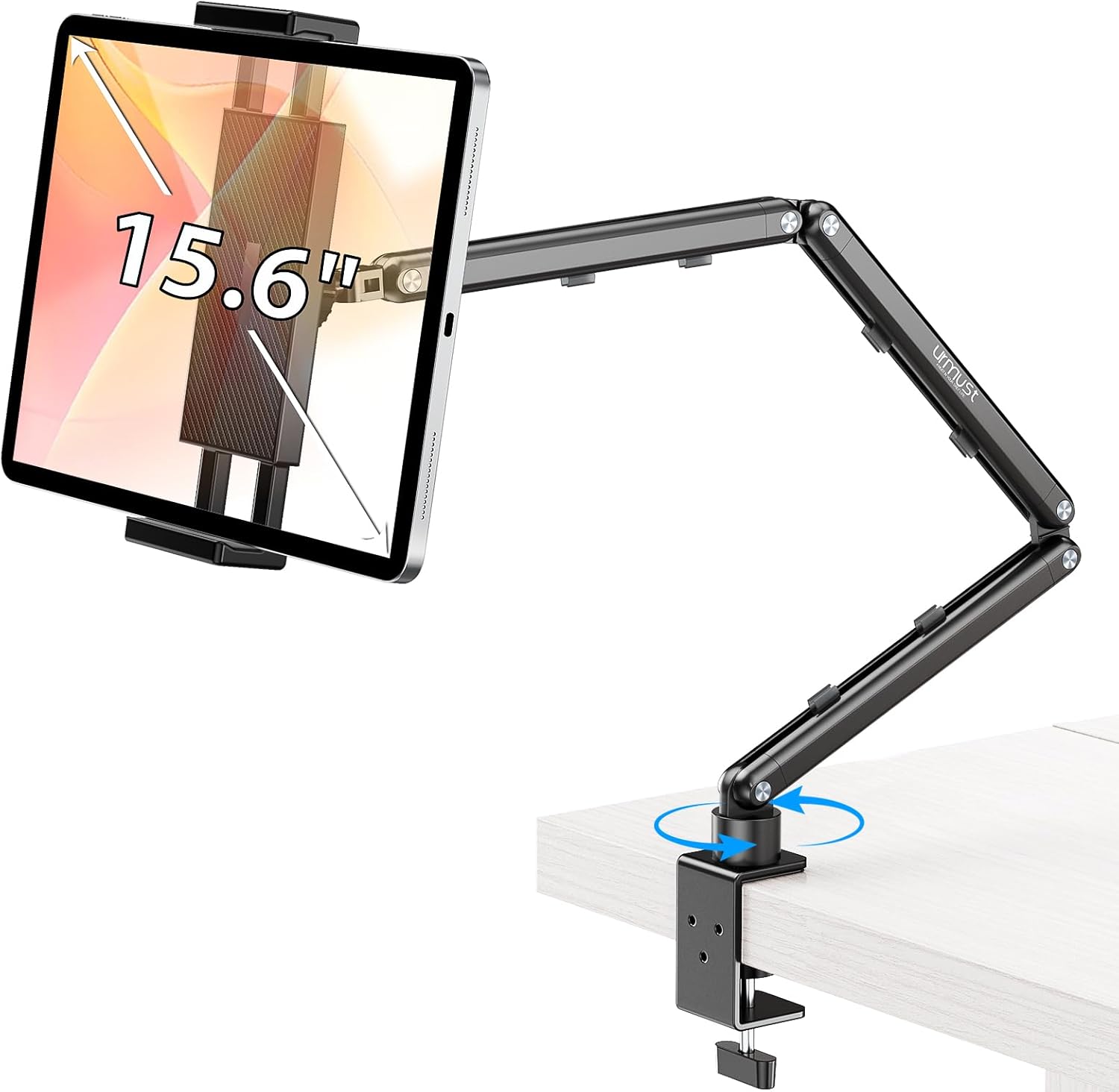
Best Tablet Stands for Bed and Desk 2026: Adjustable Arms, Goosenecks, and Lap Desks Compared
The right tablet stand for bed, desk, or kitchen changes how you use your tablet. We compare the best options from Chine