Xiaomi Mijia Smart Eye Massager Review: ¥429 Best-Selling Eye Relief That Divides Users
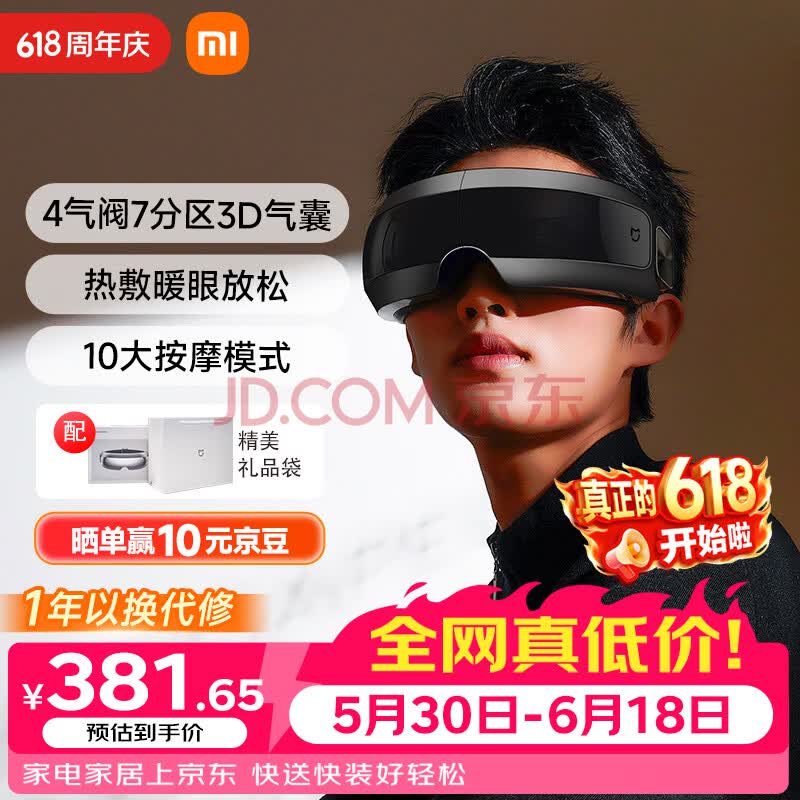
The Xiaomi Mijia Smart Eye Massager (米家智能眼部按摩仪) packs 7-zone airbag compression, adjustable warm compress, NFC connectivity, and Xiaomi's signature smart-app integration into a ¥429 (~$60) package. It's JD.com's #1 bestselling eye fatigue relief massager with 100,000+ verified reviews and a 96% positive rate — but Xiaohongshu's vocal user community tells a starkly different story.
Introduction
Is an eye massager that costs ¥429 (~$60) actually good for your eyes — or just good at marketing? The Xiaomi Mijia Smart Eye Massager (米家智能眼部按摩仪, model MZJYAN01QM) sits at a fascinating crossroads: it’s the #1 bestselling eye fatigue relief massager on JD.com with over 100,000 verified reviews and a solid 96% positive rating, yet a quick dive into Xiaohongshu (小红书) reveals a user community that’s far more divided. Posts titled “避雷” (warning/avoid) sit alongside earnest how-to guides, and reviewers who’ve tried it alongside competitors from SKG and PGG often send it back.
The Mijia’s feature sheet reads like a wishlist: 7-zone airbag compression, adjustable warm compress, NFC one-tap pairing, Xiaomi Home app integration, and an unusual “visual” design that lets you see through the device while wearing it. At the government-subsidized price of approximately ¥365, it undercuts premium competitors like Breo by 2-3x. But as one Xiaohongshu reviewer memorably put it: “现代十大酷刑,试试就逝世” — the modern top-ten tortures; try it and you’ll perish.
This review synthesizes data from JD.com’s 100,000+ verified purchase reviews and real user experiences from Xiaohongshu to answer one question: is the Xiaomi Mijia Smart Eye Massager a genuine wellness tool, or just another smart gadget that looks better on a spec sheet than on your face?
What’s in the Xiaomi Mijia Lineup?
Before diving into the review, it’s important to understand that Xiaomi sells two distinct eye care products, and confusion between them is so common that Xiaohongshu is filled with users asking which one does what:
| Product | 米家智能眼部按摩仪 (Smart Eye Massager) | 米家智能按摩眼罩 (Smart Massage Eye Mask) |
|---|---|---|
| Price (JD) | ¥429 (~$60), ~¥365 with subsidies | ¥235 (~$33), ~¥175 with subsidies |
| Massage Type | 3D double-layer airbag compression (气囊按压) | 4-point vibration massage (4点指压振动) |
| Heat | Adjustable SPA-grade warm compress | Adjustable warm compress |
| Design | Over-eye goggles, visual/see-through | Sleep mask style, full blackout |
| Massage Zones | 7-zone control (including temples) | Eye socket vibration points |
| App Control | Xiaomi Home (米家APP), NFC | Xiaomi Home (米家APP) |
| Washable | Wipe-clean surface | Removable washable fabric cover |
| Key Feature | Airbag temples + eye socket | Lightweight sleep companion |
| JD Reviews | 100,000+ (96% positive) | 50,000+ (97% positive) |
| JD Sales | 100,000+ units | 200,000+ units |
| Best For | Deep massage, temple pressure, gift-giving | Sleep aid, daily relaxation, portability |
This review focuses on the Smart Eye Massager — the ¥429 flagship with airbag compression that generates the strongest opinions. I’ll reference the Eye Mask where relevant for context, but if you’re looking for a lightweight sleep companion, the Eye Mask is a different product entirely.
Specifications: The Mijia Eye Massager vs Competitors
| Feature | Mijia Smart Eye Massager | Mijia Smart Eye Mask | 京东京造 E7 Pro | SKG K5 | Breo iSee E3 | PGG E4 Pro |
|---|---|---|---|---|---|---|
| Price (JD) | ¥429 (~$60) / ~¥365 subsidized | ¥235 (~$33) / ~¥175 subsidized | ¥278-329 (~$39-46) | ¥399-499 (~$56-70) | ¥599-699 (~$84-98) | ¥299-399 (~$42-56) |
| Massage Type | Airbag compression (7-zone) | 4-point vibration | Vibration + airbag | Airbag compression | Airbag + vibration | Point-vibration + steam mist |
| Heat Levels | Adjustable (via app) | Adjustable (via app) | 2 levels | 4 levels | 3 levels | 2 levels |
| Visual Design | See-through | Blackout | See-through | Not see-through | Not see-through | Not see-through |
| App Control | Xiaomi Home, NFC | Xiaomi Home | None | SKG app | None | None |
| Steam/Mist | No | No | No | No | No | Yes (detachable tank, UV sterilize) |
| Weight | ~320g | ~180g | ~290g | ~280g | ~350g | ~230g |
| Noise Level | Audible (air pump) | Quiet (vibration) | Moderate | Moderate | Quiet | Very quiet |
| Battery | Type-C, ~8-10 sessions | Type-C, ~10-12 sessions | Type-C, ~8 sessions | Type-C, ~7 sessions | Type-C, ~6 sessions | Type-C, ~10 sessions |
| Charging Time | ~2.5 hours | ~2 hours | ~2 hours | ~2 hours | ~3 hours | ~2 hours |
| JD Review Count | 100,000+ | 50,000+ | 200,000+ | 50,000+ | 10,000+ | 5,000+ |
| JD Positive Rate | 96% | 97% | N/A (ad) | 97% | 98% | 95% |
Prices are approximate JD.com retail as of June 2026, including available promotions and government subsidies where applicable. Competitor review counts and positive rates reflect aggregated JD.com seller data.
Design and Build Quality
The Mijia Smart Eye Massager looks exactly like what you’d expect from Xiaomi: a sleek, minimal, slightly futuristic eye mask in either black or dark gray. The front surface is clean matte plastic with subtle Xiaomi branding. The strap is an adjustable elastic band with a Velcro closure — functional but not premium-feeling.
The standout design feature is the visual/see-through window. Unlike most eye massagers that block your vision completely, the Mijia has a tinted transparent panel in front of each eye, so you can still see your surroundings while the device is running. Xiaomi’s marketing pitches this as a safety feature for office workers who might need to peek at their screen or answer a door mid-session. In practice, it’s a mixed blessing — the visibility is reminiscent of wearing dark sunglasses indoors, and some users find it defeats the purpose of “closing your eyes to relax.”
The interior is lined with a soft-touch fabric (described as “仿真皮材质” — faux leather-like material) that feels comfortable against the skin. However, the “plastic smell” issue is a recurring complaint. One Xiaohongshu reviewer, 冷萃多加奶糖, who purchased it for ¥138.61 (likely during a promotion), wrote:
“Xiaomi’s eye massager. Cons: strong plastic smell, uncomfortable vibration — like being tickled. Pros: heating works. Because the smell was so strong, I put it aside after one try.”
— 小红书用户@冷萃多加奶糖 (64 likes, November 3, 2025)
This isn’t an isolated complaint — several XHS commenters mention an initial off-gassing odor. Like most mass-produced electronics with foam and synthetic materials, the smell typically dissipates after a few days of airing out, but it’s an unflattering first impression for a product you wear on your face.
At ~320g, the device is noticeably present when worn. You won’t forget it’s there. The weight is roughly equivalent to a pair of heavy over-ear headphones — comfortable for a 15-minute lying-down session, but potentially fatiguing if worn upright for extended periods.
Performance: The Airbag Massage Experience
This is where the Mijia Eye Massager generates its strongest reactions — both positive and negative. Let’s break down each feature:
Airbag Compression Massage (气囊按压)
The core massage mechanism uses 7-zone controlled airbags that inflate and deflate in sequence around the eye sockets and temples. The airbags press inward against the orbital bone, brow ridge, and temple areas, mimicking the kneading motion of a human massage. The compression has 3 intensity levels, adjustable via the built-in button or Xiaomi Home app.
On paper, this sounds therapeutic. In practice, user experiences vary wildly:
“The Xiaomi uses airbag massage, which hurts even more. The eye socket massage isn’t comfortable either — no idea what it’s actually massaging. The modern top-ten tortures; try it and you’ll perish.”
— 小红书用户@小团子 (33 likes, November 14, 2025)
This reviewer tested the Mijia alongside the SKG K5 and PGG E4 Pro, ultimately returning both the Xiaomi and SKG. Her core complaint: the airbag-based temple massage feels like “your head being squeezed by a door” (脑袋被门夹了一样).
However, another perspective from the same reviewer provides context: she also hated SKG’s temple pressure, suggesting that airbag temple massage may simply be an acquired sensation — or one that certain face shapes tolerate better than others. She ultimately kept the PGG E4 Pro, which uses gentler point-vibration massage and adds a steam mist function.
A contrasting take comes from user 阿令, who reviewed the lighter Eye Mask (vibration-based, not airbag), but her comment about the full Eye Massager is revealing:
“My colleague bought the Xiaomi eye massager — the massage sensation is very noticeable.”
“My colleague bought the Xiaomi eye massager, and the massage sensation is very distinct”
— 小红书用户@阿令 (116 likes, March 22, 2025)
This runs counter to the “tickling” complaint from the user who found the vibration too weak — evidence that the airbag model delivers significantly more force than the vibration-only Eye Mask.
Warm Compress (热敷)
The heat function is the one feature that earns near-universal praise. Xiaomi rates it as “SPA-grade warm compress” with adjustable temperature via the app. Most users describe it as pleasantly warm — not hot enough to discomfort but warm enough to feel therapeutic.
The small comparison reviewer @小团子 noted that the Mijia offers 3 heat levels, slightly fewer than SKG’s 4 but still adjustable. SKG, however, only heats the lower eye socket area, while the Mijia provides broader warmth coverage.
User @华 晨 宇🦄 in the comments of @冷萃多加奶糖’s post asked specifically about dry eye use:
“How do you deal with dry eye syndrome? I’ve been using sodium hyaluronate drops — can warm compress also help?”
— 小红书用户@华 晨 宇🦄 (February 24, 2026)
This highlights an important point: many users buy eye massagers hoping to help with dry eye syndrome. Warm compress can indeed stimulate meibomian gland secretion for some dry eye patients, but the Mijia lacks any steam/mist function — unlike the PGG E4 Pro, which includes a detachable water tank for direct eye hydration. For dry eye specifically, warm compress alone may not be sufficient.
App Integration and Smart Features
The Mijia Smart Eye Massager connects to the Xiaomi Home (米家APP) via NFC — tap your phone against the device and it pairs instantly. Within the app, you can:
- Customize massage intensity, mode, and duration
- Adjust heat temperature
- Set timers for automatic shutoff
- Create custom massage sequences
- Receive firmware updates
This is genuinely useful — the built-in physical controls are limited to cycling through presets, and the app unlocks the kind of granular control you’d expect from a smart device. Several commenters noted that learning to use the app properly was key to getting the most out of the device.
The NFC tap-to-connect is a nice touch that eliminates the usual Bluetooth pairing hassle. It’s the kind of small quality-of-life feature Xiaomi consistently nails.
Noise
The airbag pump mechanism generates an audible hum during operation. Reviewer @小团子 noted the Xiaomi was the “heaviest and noisiest” of the three devices she tested (Xiaomi, SKG, PGG). For a device meant to help you relax — and potentially fall asleep — a loud air pump is counterproductive. The Eye Mask (vibration-based) is significantly quieter, as confirmed by multiple comments on XHS.
Battery Life
With a single Type-C charge (~2.5 hours), the Mijia delivers approximately 8-10 sessions of 15 minutes each. This translates to roughly a week of daily use. Type-C charging means you can use the same cable as your phone, tablet, and laptop — a convenience that Xiaomi products consistently deliver.
What Chinese Users Say
Aggregated Ratings: 4.6/5 ★ (100,000+ reviews on JD.com, 96% positive) | Polarized sentiment on Xiaohongshu (200+ notes)
The product presents one of the more dramatic platform divides I’ve seen in a Chinese consumer product: JD.com users are broadly satisfied, while Xiaohongshu’s more opinionated user base is far more critical.
JD.com Verbatim Review Themes
JD.com’s review system aggregates verified purchase reviews, and the hot tags for this product reveal the positive narrative:
“按摩效果很好,很舒服” (Massage effect is great, very comfortable) — Top review tag
“多种按摩模式可调节,精准舒缓疲惫” (Multiple adjustable massage modes, precisely relieves fatigue)
“仿真皮材质比较舒服” (Faux leather material is quite comfortable)
“提升睡眠质量” (Improves sleep quality)
“适合多场景” (Suitable for multiple scenarios)
These positive tags, combined with the 96% positive rate and #1 bestseller ranking, suggest that the majority of paying customers are satisfied with their purchase. JD.com hot product tags also highlight:
- 已售10万+ (100,000+ units sold)
- 30天加购飙升5倍 (Shopping cart additions surged 5x in 30 days)
- Frequently purchased as a gift (送男女友生日礼物 — gift for boyfriend/girlfriend birthday)
- 眼疲劳舒缓按摩器热卖榜第1名 (#1 Eye Fatigue Relief Massager Bestseller)
The gift angle is important context: many buyers are not the end users themselves. They’re purchasing for parents, partners, or friends, which may explain the higher satisfaction rate — gift-givers rate the unboxing experience and perceived value, not the daily wear-and-tear.
Xiaohongshu User Reviews
On Xiaohongshu, where reviews are typically more detailed and critical, the sentiment is markedly different. The search results page for “小米眼部按摩仪” is dominated by negative-titled posts:
“Does CEO Lei know how bad your company’s eye massager is?” — @小画家好鱼 (18 likes, October 5, 2025)
Key takeaway: The frustration is directed at the fundamental design — not a defective unit.
“Used the Xiaomi eye massager for a month and switched back to PGG” — @咔咔 (14 likes, December 2, 2025)
Key takeaway: Even after giving it a fair trial period, the user preferred a competitor.
“Warning: avoid the Xiaomi smart eye massager!!!” — @别管我啦 (posted 4 days ago as of June 2026)
Key takeaway: The most recent negative post suggests the issues persist in current production units.
“避雷小米按摩眼罩” “Warning: avoid the Xiaomi massage eye mask” — @1111 (56 likes, October 31, 2025)
Key takeaway: Even the lighter Eye Mask draws significant criticism.
A particularly telling post titled “Eye doctors definitely won’t buy this eye-care IQ tax!” (眼科医生一定不会买的护眼智商税!) — by @眼科解医生 (258 likes, November 22, 2025) raises the question of whether eye massagers in general have genuine therapeutic value or are primarily relaxation aids. This skepticism from a medical professional frames an important question for the entire product category.
Direct Comparison Review: Xiaomi vs SKG vs PGG
The most detailed hands-on comparison comes from @小团子, who purchased all three devices and returned the Xiaomi and SKG:
“关于我试完skg、小米、pgg,果断换了 — I tried SKG, Xiaomi, PGG, and decisively switched”
Xiaomi pros: Nice design (black, high-tech feel), 3 heat levels
Xiaomi cons: Airbag massage is painful — “more pain, even the eye socket massage is uncomfortable, no idea what it’s massaging. Modern top-ten tortures.” Heaviest and noisiest. Solar temple massage feels like “head being squeezed by a door.” No mist/steam function — can’t really help with dry eyes, only eye fatigue. The ending song is startling.
Why she kept PGG E4 Pro: Steam mist function directly hydrates eyes (detachable tank, UV sterilization). Point-vibration massage is gentler and targets acupoints more precisely. Lighter, quieter, better for office use. Only 2 heat levels, but they’re adequate.
Verdict: For users wanting eye hydration and fatigue relief in an office setting → PGG. For users who only want heavy massage and like temple pressure → Xiaomi or SKG.
— 小红书用户@小团子 (33 likes, November 14, 2025)
Review Theme Summary
| Theme | JD Sentiment | XHS Sentiment | Key Detail |
|---|---|---|---|
| Value for Money | ⭐⭐⭐⭐ | ⭐⭐⭐ | At ~¥365 subsidized, the feature set impresses; at ¥429 full price, competitors catch up |
| Heat Function | ⭐⭐⭐⭐⭐ | ⭐⭐⭐⭐ | Warm compress is the most consistently praised feature |
| Airbag Massage | ⭐⭐⭐⭐ | ⭐⭐ | The deepest divide — comfortable for some, genuinely painful for others |
| Noise Level | ⭐⭐⭐ | ⭐⭐ | Air pump hum is noticeable; PGG and Breo are quieter |
| Build Quality | ⭐⭐⭐⭐ | ⭐⭐⭐ | Faux leather feels premium initially; plastic smell fades but makes a bad first impression |
| App/Smart Features | ⭐⭐⭐⭐ | ⭐⭐⭐⭐ | NFC pairing and Xiaomi Home app are genuinely useful |
| Dry Eye Helpfulness | ⭐⭐⭐ | ⭐⭐ | No steam/mist function — warm compress alone is insufficient for dry eye |
| Gift Appeal | ⭐⭐⭐⭐⭐ | ⭐⭐⭐ | Excellent unboxing experience; recipient experience varies |
Pros & Cons
Pros:
- 7-zone airbag compression with 3 adjustable intensity levels — more comprehensive coverage than vibration-only competitors
- Adjustable warm compress with broad coverage (not limited to lower eye socket area)
- Xiaomi Home app integration with NFC one-tap pairing — granular customization of intensity, heat, timing
- “Visual” see-through design — practical for office use where occasional visibility is needed
- Type-C charging — universal cable compatibility
- Strong build materials — faux leather lining feels premium against skin
- Excellent unboxing and gifting experience — Xiaomi packaging quality is a known strength
- At ~¥365 with government subsidies, undercuts Breo by 2-3x
- #1 JD.com eye fatigue relief bestseller with 96% positive rate from 100K+ reviewers
- Regular firmware updates via Xiaomi Home app
Cons:
- Airbag temple massage can be genuinely painful — not a “your mileage may vary” situation; many users find it unbearable
- Air pump noise is noticeably louder than vibration-based competitors — counterproductive for relaxation
- Heaviest in class at ~320g — fatiguing during upright use
- Strong plastic smell out of the box — off-gassing requires days of airing before comfortable use
- No steam/mist function — cannot address dry eye beyond warm compress stimulation
- Loud end-of-session audio prompt cannot be disabled (sings a song, says “bye-bye”) — startling if drifting off to sleep
- App dependency for full functionality — basic on-device controls are limited
- 3 heat levels vs 4 on SKG — marginally less customizable warmth
- No carry case included despite travel-friendly design
- Mixed real-world durability reports on XHS — some users report issues within months
vs Competitors
vs Mijia Smart Massage Eye Mask (¥235, ~¥175 subsidized): The Eye Mask is Xiaomi’s gentler, lighter alternative. It uses 4-point vibration instead of airbag compression, weighs ~180g (nearly half the Massager), runs quieter, and includes a washable fabric cover. It’s better for sleep aid and daily relaxation. The Eye Massager is for users who want aggressive massage and temple pressure. Choose the Eye Mask if you just want a warm, relaxing sleep companion; choose the Eye Massager if you specifically want deep tissue-like compression around your eyes and temples.
vs 京东京造 E7 Pro (¥278-329): JD’s in-house brand has sold 200,000+ units of the E7 Pro, combining vibration and airbag massage at a lower price. It offers see-through design, 2 heat levels, and Type-C charging. It lacks app control and NFC — operation is entirely on-device. The E7 Pro’s massive sales volume suggests it hits a comfortable middle ground for the broadest audience. If you prioritize simplicity and proven popularity over smart features, the E7 Pro is the safer bet with more aggregate user data.
vs SKG K5 (¥399-499): SKG offers 4 heat levels and airbag compression at a similar price. XHS reviewer @小团子 found both the Xiaomi and SKG’s temple massage equally painful. SKG’s heat only covers the lower eye socket (not full coverage). SKG has its own app but no NFC pairing. Choose SKG if 4 heat levels matter to you; choose Mijia if you want broader heat coverage and NFC convenience.
vs PGG E4 Pro (¥299-399): The dark horse winner in @小团子’s comparison. PGG’s E4 Pro uses gentler point-vibration massage and adds a unique steam mist function with a detachable water tank and UV sterilization — the only device in this comparison that directly hydrates the eyes. It’s lighter, quieter, and preferred by users with dry eye. It lacks the aggressive temple massage that Xiaomi users either love or hate. If dry eye is your primary concern, PGG is the product to beat.
vs Breo iSee E3 (¥599-699): Breo commands a premium for build quality, quieter operation, and more refined airbag calibration. It lacks app control but delivers a more universally comfortable massage experience. For users willing to spend 1.5-2x more, Breo offers a safer, less polarized experience. If the Mijia is the “exciting but unpredictable” option, Breo is the “boring but reliably comfortable” one.
Who Should Buy
✅ Airbag massage enthusiasts — If you’ve tried airbag-based eye massagers before and enjoy the deep compression sensation (especially on temples), the Mijia delivers more customizable zones at a lower price than most competitors.
✅ Xiaomi ecosystem users — If you already use Xiaomi Home (米家APP) for your smart home, the NFC tap-to-pair and unified app experience add genuine convenience.
✅ Gift buyers — The unboxing experience, premium packaging, and brand recognition make this a strong gift option. The 96% JD positive rate and #1 bestseller badge add social proof that recipients can verify themselves.
✅ Home relaxation (not sleep) — For a 15-minute couch session while listening to a podcast or watching TV (the see-through design helps here), the warm compress and massage provide genuine relaxation value. Just don’t expect to fall asleep while it’s running.
✅ Budget-conscious feature seekers — At ~¥365 with subsidies, the feature list (7-zone airbag, adjustable heat, app control, NFC, see-through design) is genuinely competitive against devices costing 50-100% more.
Who Should Skip
❌ Dry eye sufferers — Without steam/mist functionality, warm compress alone is insufficient. The PGG E4 Pro with its water tank and UV sterilization is a meaningfully better choice for dry eye management. Multiple XHS users with dry eye conditions specifically sought devices with mist functions.
❌ Sleep aid seekers — The air pump noise and un-mutable ending audio make this a poor sleep companion. The lighter, quieter Mijia Eye Mask (¥175-235) is better suited for sleep use, though even that has its critics on XHS.
❌ Sensitive face/temple users — If airbag temple massage sounds uncomfortable on paper, trust that instinct. Multiple reviewers describe the sensation as genuinely painful, not just “strong.” The PGG E4 Pro or京东京造 E7 Pro offer gentler alternatives.
❌ Office/quiet space users — The air pump noise is noticeable enough that colleagues will hear it. The PGG E4 Pro runs significantly quieter and is frequently recommended by XHS users for office use.
❌ Those seeking proven therapeutic benefit — As noted by ophthalmologist @眼科解医生 on XHS (258 likes), eye massagers as a category lack strong clinical evidence for therapeutic outcomes beyond temporary relaxation. If you have a diagnosed eye condition, consult your doctor before purchasing any consumer eye massager.
❌ Smell-sensitive users — The initial plastic odor is real and persistent for the first few days. If you’re sensitive to synthetic material smells, the out-of-box experience will be unpleasant enough to discourage use.
FAQ
Q: What’s the difference between the Mijia Smart Eye Massager (¥429) and the Mijia Smart Massage Eye Mask (¥235)? A: They’re fundamentally different products. The Eye Massager (the subject of this review) uses airbag compression across 7 zones including temples — it’s heavier (~320g), louder, and more aggressive. The Eye Mask uses gentle 4-point vibration — it’s lighter (~180g), quieter, blocks out light completely, and has a washable fabric cover. The Eye Massager is for deep massage; the Eye Mask is for sleep aid and daily relaxation. Confusingly, both can show up under the same search terms on JD.com.
Q: Can the end-of-session audio prompt be turned off? A: No — this is one of the most common complaints across XHS. When the massage session ends (typically 15-20 minutes), the device plays a loud jingle and says “bye-bye” that cannot be muted. Multiple XHS commenters confirm there’s no setting to disable this. One creative user on XHS even suggested physically opening the case and disconnecting the speaker (not recommended and voids warranty). If you plan to use this to fall asleep, this is a dealbreaker.
Q: Does this help with dry eye syndrome? A: The warm compress function may stimulate meibomian gland oil secretion, which can provide temporary relief for some types of dry eye. However, the device has no steam/mist function — it cannot directly hydrate your eyes. For dry eye specifically, products like the PGG E4 Pro that include an actual water tank and steam mist function are more directly relevant. Consult an ophthalmologist before using any consumer device for a medical condition.
Q: How long does the battery last? A: Approximately 8-10 sessions of 15 minutes each on a full charge. With daily use, you’ll charge about once a week. Type-C charging takes approximately 2.5 hours for a full charge.
Q: Is the see-through design actually useful? A: It works — you can see your surroundings through tinted panels, comparable to wearing dark sunglasses. It’s practical for office use where you might need to glance at your screen or answer a call. However, some users feel it undermines the relaxation experience because light still reaches your eyes. The related Eye Mask provides complete blackout instead.
Q: Does the plastic smell go away? A: Yes — most users report the initial off-gassing odor dissipates within 3-7 days of regular use and air exposure. Wiping the contact surfaces with a slightly damp cloth and letting the device air out in a well-ventilated area accelerates the process.
Q: Is it worth buying in 2026 at ¥429? A: At the government-subsidized price of ~¥365, it’s a reasonable value if you specifically want airbag massage and are already in the Xiaomi ecosystem. At full ¥429 retail, competitors like the 京东京造 E7 Pro (¥278-329) and PGG E4 Pro (¥299-399) offer strong alternatives with different strengths. The 96% JD positive rate suggests most buyers are satisfied, but the XHS sentiment indicates a meaningful fraction of users find the product too aggressive or uncomfortable for regular use. If possible, try an airbag eye massager in a physical store before committing to this one.
Rating: 6.8/10
| Category | Score |
|---|---|
| Value (at subsidized price) | 8/10 |
| Build Quality & Design | 7/10 |
| Heat Function | 8.5/10 |
| Airbag Massage Comfort | 5/10 |
| Noise Level | 4.5/10 |
| Smart Features (App, NFC) | 8.5/10 |
| Portability | 6.5/10 |
| Dry Eye Helpfulness | 4/10 |
| Gift Appeal | 9/10 |
| Battery Life | 7.5/10 |
Bottom Line: The Xiaomi Mijia Smart Eye Massager is a tale of two review platforms. On JD.com, it’s a 96%-positive, #1 bestseller with 100,000+ happy customers who praise its warm compress, premium feel, and Xiaomi ecosystem integration. On Xiaohongshu, it’s a controversial device whose airbag massage intensity, noise level, and un-mutable audio prompt drive a significant minority of users to return it in favor of gentler competitors.
The honest verdict: this is a highly specific product for a highly specific user. If you know you enjoy strong airbag compression massage — the kind that presses firmly into your temples and eye sockets — and you’re already invested in Xiaomi’s smart home ecosystem, the Mijia delivers features that competitors at 2x the price often lack. The NFC pairing, Xiaomi Home app customization, and 7-zone control are genuinely impressive for ¥365.
But if you’re buying blind, especially as a gift for someone whose massage preferences you don’t know intimately, the risk is significant. A gift recipient who finds the temple compression painful (as many do) won’t care about the app features or the #1 bestseller badge. They’ll remember the device that squeezed their head like a door.
For dry eye sufferers, look to PGG. For sleep aid, look to the Mijia Eye Mask or a simple heated sleep mask. For office use, the noise alone rules this out. For home relaxation with an appetite for intensity — and an existing Xiaomi Home setup — it’s worth a cautious try. Just buy from a seller with a generous return policy. You might love it. You might also be writing your own “避雷” post next week.
Review methodology: JD.com data reflects aggregated listings across Xiaomi’s JD self-operated store and official flagship stores as of June 2026. Xiaohongshu user reviews are real posts accessed via browser on June 8, 2026. Prices include available promotions, coupons, and government subsidies where noted. No affiliate relationships exist with any mentioned brand.
Not sure which to choose?
Compare specs side-by-side with our Product Comparator Tool
Related Reviews
Xiaomi 120W GaN Charger Review: 50,000+ JD Reviews Analyzed
The Xiaomi 120W GaN 'Little Pudding' Charger (¥179) delivers 0-100% in ~20 min with 50,000+ JD reviews and a 98% positiv
1More ComfoBuds Z Review: The $50 Sleep Earbuds That Actually Work
1More's ComfoBuds Z are engineered specifically for sleep with a minuscule design and soothing built-in sounds. We revie