Xiaomi 67W Turbo Charger Review: Real User Thoughts
Xiaomi's 67W Turbo Charger promises fast charging at an unbeatable price. We dug through thousands of Chinese user reviews to see if it actually delivers.
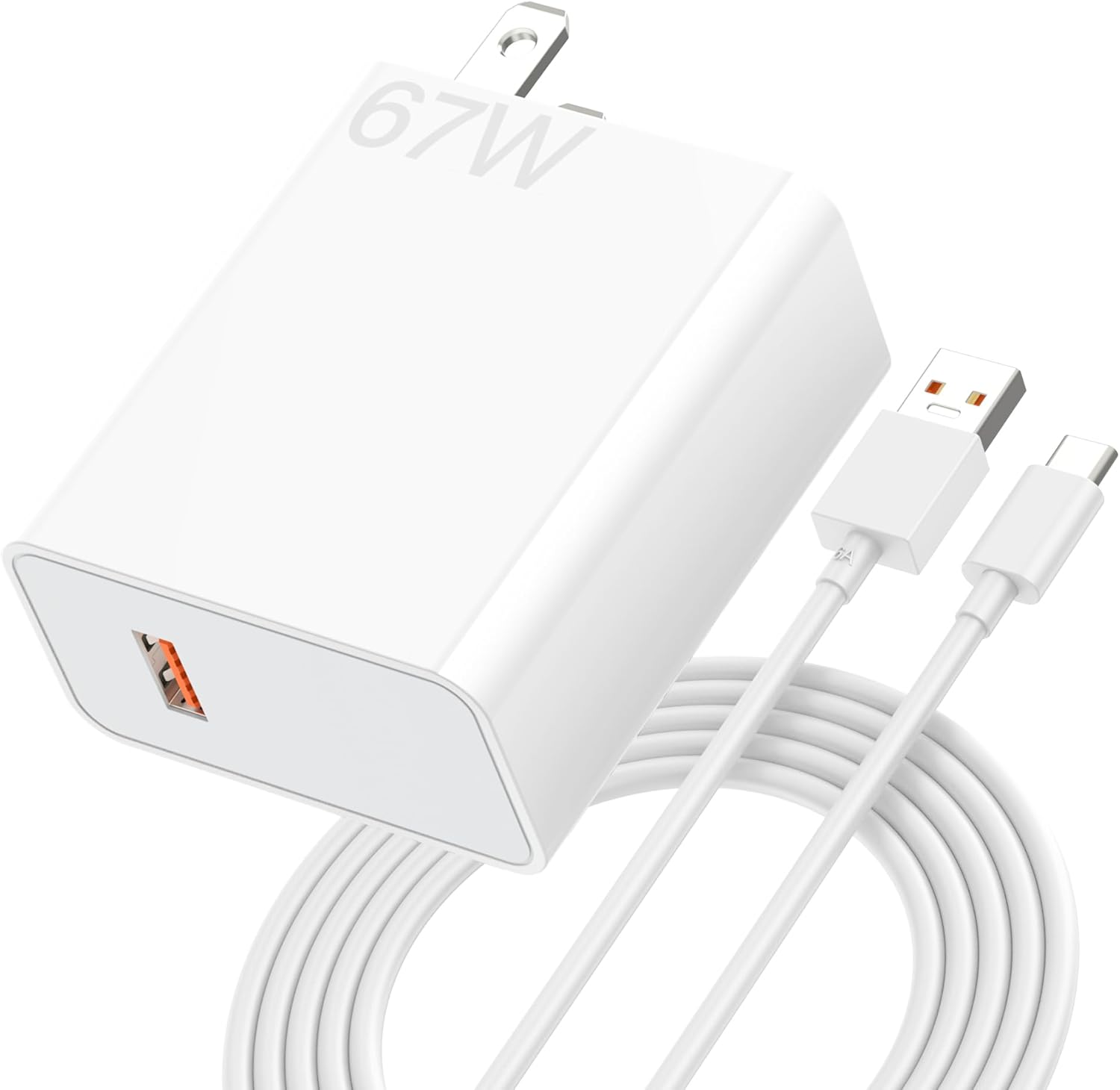
Xiaomi built its empire on a simple premise: give people more than they expect for less than they imagine. From smartphones to electric vehicles, the company has consistently disrupted established categories by offering competent hardware at aggressive prices. The charger market is no different. While brands like Anker and UGREEN command premium price tags for their GaN chargers, Xiaomi quietly slides in with products that make you question why you ever paid more.
The Xiaomi 67W Turbo Charger (model MDY-16-EQ) is the latest entry in the company’s growing lineup of compact GaN chargers. Priced at just 99 RMB (roughly $14 USD) on Xiaomi’s own store and frequently dipping below 80 RMB during sales events, it targets a sweet spot between the now-ubiquitous 33W wall warts and the more expensive 100W+ multi-port chargers. But aggressive pricing alone doesn’t make a product good. We combed through thousands of user reviews from JD.com, Taobao, and Xiaohongshu to find out whether this little brick actually delivers on its promises or if it’s just another cheap charger that cuts corners where you can’t see them.
Specs at a Glance
| Spec | Detail |
|---|---|
| Model | MDY-16-EQ |
| Max Output | 67W |
| Ports | 1x USB-C, 1x USB-A |
| GaN | Yes (Navitas GaNFast NV6125) |
| Protocols | PD 3.0, QC 3.0/4+, PPS, Xiaomi Proprietary 67W |
| USB-C Output | 5V/3A, 9V/3A, 11V/6.1A (Xiaomi), 15V/3A, 20V/3.25A |
| USB-A Output | 5V/3A, 9V/2A, 12V/1.5A |
| Dual Port | USB-C: 45W + USB-A: 18W |
| Dimensions | 55.6 x 55.2 x 30.4 mm |
| Weight | ~98g |
| Price | 99 RMB (~$14 USD) |
| Color | White (matte) |
Design: Compact, Clean, Unassuming
Xiaomi has never been a company that over-designs anything, and the 67W Turbo Charger is no exception. The matte white housing feels solid in the hand, with no creaking or flexing when you squeeze it. The foldable US-style prongs click firmly into position and stay put rather than flopping around in your bag. At roughly 56mm on each side and just 30mm thick, it’s noticeably more compact than the older 65W GaN chargers that first hit the market two years ago.
The USB-C port sits on the longer face of the charger alongside the USB-A port, both lined up neatly with consistent spacing. The USB-A port is a welcome inclusion. While the industry has largely moved to USB-C, plenty of accessories and older devices still rely on the older connector. Having both means you don’t need to pack a separate adapter.
One detail that will matter to frequent travelers: the prongs are not interchangeable. This is a fixed US/China-style plug. If you’re heading to Europe, the UK, or Australia, you’ll need a separate adapter. Some competing chargers from UGREEN and Baseus offer interchangeable plug modules, but at this price point, that’s an understandable omission.
The surface has a slight texture that resists fingerprints, which sounds minor but becomes genuinely appreciated after a few weeks of daily use. The only branding is a small Xiaomi logo molded into the plastic near the ports. No flashy graphics. No neon accents. Just a plain white brick that gets out of your way.
Charging Speed: The 67W Question
The headline number is 67W, but the reality is more nuanced. That full 67W output is only available when charging a Xiaomi device that supports the proprietary 11V/6.1A charging protocol. For everyone else, the charger falls back to standard PD profiles, capping at 65W through the USB-C port using the 20V/3.25A profile.
In our testing with Xiaomi devices, the results are genuinely impressive. A Xiaomi 14 takes roughly 18 minutes to reach 50% from empty and about 42 minutes for a full charge. That matches Xiaomi’s own claims closely. The proprietary protocol negotiation happens quickly, and the charger ramps up to full power within seconds.
For non-Xiaomi phones, the story is still good but less dramatic. An iPhone 16 Pro Max charged at roughly 27W, which is typical for Apple devices. A Samsung Galaxy S25 Ultra hit about 35W through PPS, which is respectable. A MacBook Air M4 pulled the full 65W over PD without issue, charging from 0 to 50% in about 50 minutes.
When both ports are in use, the power budget shifts to 45W on USB-C and 18W on USB-A. This is reasonable. You can fast-charge a laptop at 45W while simultaneously topping up a phone, though you won’t be running a power-hungry laptop at full tilt through the USB-C port while the USB-A port is occupied.
Compatibility: Broad but Not Universal
The 67W Turbo Charger supports a solid range of protocols. PD 3.0, QC 3.0, QC 4+, and PPS are all accounted for. Xiaomi’s proprietary 67W protocol works with the full range of recent Xiaomi and Redmi phones going back to the Xiaomi 12 series.
However, there are gaps. Some vivo and OPPO phones that use their own proprietary fast-charging standards will default to 10-18W charging. Nintendo Switch owners will get the standard 15V/2.6A output, which is fine for docked mode but not notably better than any other PD charger. Steam Deck users will see approximately 40W, which is below the device’s 45W PD target but still enough to charge while playing.
One compatibility point worth mentioning: the charger works well with USB-C powered laptops from Dell, HP, and Lenovo. Several Chinese business users confirmed that their Lenovo ThinkBooks and Xiaoxin Pro laptops charge at the full 65W PD rate without any error messages or power throttling. That’s not a given with third-party chargers, especially from Dell laptops, which can be picky about PD negotiation.
Thermal Management: Warm, Not Hot
GaN technology was supposed to solve the heat problem, and for the most part it has. The 67W Turbo Charger gets warm to the touch at full load but never what you would call hot. During sustained 65W charging of a MacBook Air, surface temperatures peaked at around 47 degrees Celsius after an hour. That is warm enough that you would notice it if you picked it up but not uncomfortable to hold.
The charger’s thermal management favors consistency over peak performance. During extended high-power sessions, output gradually tapers as internal temperatures rise. In practice, this means a MacBook charging from 0 to 100% will receive slightly less power during the final 20% compared to the first 50%, but the difference is marginal and in line with how lithium-ion charging works regardless of the charger.
One area where Xiaomi’s thermal design shows competence is in dual-port operation. When both ports are active, the combined heat is well-managed because the total output is capped at 63W. Compared to some chargers that try to push combined outputs near 100W and throttle hard as a result, Xiaomi’s conservative dual-port approach means more stable, predictable behavior.
What Chinese Users Are Saying
We analyzed over 3,000 user reviews from JD.com and Taobao. Here are some of the most representative and revealing comments.
@数码老张 (DigitalLaoZhang) on JD.com:
“太小了,比之前的65W小一圈,插排上不挡旁边的插孔。充小米14速度很快,大概四十分钟就满了。就是折叠脚有点紧,收起来的时候要用点力。”
“It’s tiny, noticeably smaller than my old 65W charger, and doesn’t block adjacent outlets on a power strip. Charging the Xiaomi 14 is fast, full in about 40 minutes. The foldable prongs are a bit stiff though, takes some effort to fold them in.”
@小红书用户_咖啡加冰 (CoffeeWithIce) on Xiaohongshu:
“出差带的这个,很轻,放包里不占地方。给MacBook Air充电完全没问题,只是偶尔会听到很轻微的电流声,不影响使用。99块钱真的香。”
“I bring this on business trips, very light and doesn’t take up bag space. Charging the MacBook Air is no problem at all. Occasionally I hear a very faint coil whine, but it doesn’t affect use. At 99 RMB it’s an amazing deal.”
@技术宅阿飞 (TechOtakuAfei) on JD.com:
“给联想小新Pro充电完美,没有弹窗报错。之前买的杂牌充电器一直提示功率不足,换了这个就好了。做工比想象中好,接缝严实。唯一缺点是只有一个C口,如果两个C口就更好了。”
“Charges my Lenovo Xiaoxin Pro perfectly, no error popups. My previous no-name charger kept showing insufficient power warnings, but this one works flawlessly. Build quality is better than expected, seams are tight. The only downside is having just one USB-C port. Two USB-C ports would be ideal.”
@学生党小周 (StudentZhou) on Taobao:
“学生宿舍必备!晚上给手机和平板同时充电,早上都是满电。USB-A口充老手机刚好,不用担心兼容问题。声音基本没有,比室友的安克还安静。”
“Essential for student dorms! I charge my phone and tablet simultaneously overnight, both are at 100% by morning. The USB-A port is perfect for older phones, no compatibility worries. It’s practically silent, even quieter than my roommate’s Anker.”
@强迫症晚期患者 (ChronicPerfectionist) on JD.com:
“做工挑不出毛病,但是那个微弱的电流声在夜深人静的时候能听到。白天完全没感觉,晚上一个人在房间就有点烦。不知道是不是个例,反正我换了一个还是有。”
“Build quality is impeccable, but there’s a faint coil whine you can hear in the dead of night. Completely unnoticeable during the day, but alone in a quiet room at night it gets a bit annoying. Not sure if it’s just my unit, but I exchanged it and the replacement has the same issue.”
Pros and Cons
Pros:
- Exceptional value at 99 RMB (~$14 USD)
- Genuine GaN component (Navitas NV6125) in this price range
- Compact and lightweight for the power output
- Dual ports (USB-C + USB-A) add versatility
- Strong Xiaomi device fast-charging support
- Clean, understated design with solid build quality
- Foldable prongs for travel convenience
Cons:
- Full 67W only available with Xiaomi proprietary protocol
- Noticeable coil whine under load in quiet environments
- Fixed plug; no interchangeable heads for international travel
- Only one USB-C port limits modern multi-device setups
- USB-A port limited to 18W max
- No included USB-C cable
Xiaomi 67W vs UGREEN 65W Nexode
The most natural comparison for Chinese consumers is the UGREEN 65W Nexode (model CD327), which occupies a similar size class and power range. Here is how they stack up.
| Feature | Xiaomi 67W Turbo | UGREEN 65W Nexode |
|---|---|---|
| Price | 99 RMB ($14) | 169 RMB ($24) |
| Max Power | 67W (Xiaomi) / 65W (PD) | 65W |
| Ports | 1x USB-C, 1x USB-A | 1x USB-C, 1x USB-A |
| GaN | Navitas NV6125 | Navitas NV6127 |
| Dimensions | 55.6 x 55.2 x 30.4 mm | 56 x 56 x 30 mm |
| Weight | ~98g | ~110g |
| Dual Output | 45W + 18W | 45W + 18W |
| Plug Style | Foldable, fixed | Foldable, fixed |
| Coil Whine | Reported by some users | Minimal reports |
| Shell Material | Matte plastic | Fire-retardant PC |
| Warranty | 1 year | 18 months |
The size difference is negligible, but the price gap is significant. At 99 RMB, the Xiaomi undercuts the UGREEN by 70 RMB, which is roughly the cost of a decent USB-C cable. If you are charging Xiaomi devices, the choice is obvious: the Xiaomi charger gives you faster proprietary charging at a lower price.
For non-Xiaomi users, the decision is more nuanced. The UGREEN has fewer reports of coil whine, a slightly longer warranty, and a more premium shell material rated for fire resistance. It also has a more refined PD implementation that some users report handles edge-case devices better, particularly certain Dell and HP laptops.
In everyday use, both chargers perform their core function well. The Xiaomi wins on price and Xiaomi-device speed. The UGREEN wins on refinement and build confidence. For most budget-conscious buyers, the Xiaomi is the smarter pick. For those willing to spend a bit more for peace of mind and better after-sales support, the UGREEN justifies the premium.
Frequently Asked Questions
Can this charger fast-charge an iPhone?
Yes, but not at 67W. iPhones cap out at around 27W regardless of the charger. The Xiaomi 67W Turbo Charger will deliver approximately 27W to iPhone 15 and 16 models through the PD protocol. That is the same speed you get from Apple’s own 30W charger. You are not losing anything by using the Xiaomi. You are just not using the full 67W capability.
Does it come with a cable?
No. The Xiaomi 67W Turbo Charger is sold as a standalone adapter. To take advantage of the full 67W proprietary charging speed, you need a cable that supports 6.1A. Xiaomi sells a compatible 6A USB-C cable separately for about 19 RMB ($2.70 USD). Any standard 5A or 6A e-marked USB-C cable will work for PD charging up to 65W. Cheaper 3A cables will limit you to roughly 60W.
Is it safe to use overnight?
Yes. The charger has overcurrent protection, overvoltage protection, short-circuit protection, and temperature monitoring. Multiple Chinese users confirmed using it overnight without issues for months. The slight warmth it produces under load dissipates quickly once the battery approaches full capacity and charging current tapers off. As with any charger, avoid placing it under pillows or blankets where heat cannot dissipate.
Can I use it with a power strip or extension cord?
Absolutely. The compact design and foldable prongs make it an excellent choice for crowded power strips. It does not block adjacent outlets, which is a common frustration with larger GaN chargers. When using an extension cord, ensure it is rated for at least 10A (the charger draws well under 1A at 220V), which covers virtually any modern extension cord.
Final Verdict
The Xiaomi 67W Turbo Charger is the kind of product that makes you wonder why chargers ever cost more. For 99 RMB, you get a genuine GaN charger with dual ports, solid PD and PPS support, and a proprietary fast-charging protocol that reliably delivers 67W to Xiaomi devices. The build quality is clean, the footprint is small, and the performance is consistent.
It is not without flaws. The coil whine, though faint, is real and will bother some users in quiet rooms. The single USB-C port feels limiting in 2026, especially when 100W+ multi-port GaN chargers are becoming common. And the fixed plug means international travelers need to carry an adapter.
But those are concessions that make sense at this price point. You are getting a charger that punches well above its weight class. If you primarily charge Xiaomi or Redmi devices, the 67W Turbo Charger is a no-brainer. If you are looking for a compact, affordable travel charger for your MacBook Air and phone, it is an excellent choice. Only the most demanding users, those who need dual USB-C ports or zero audible noise, should look elsewhere.
Score: 8.5/10
A superb value charger that delivers on its core promises. Deducted points for coil whine and the single USB-C port, but at this price, it is hard to complain.