Xiaomi 100W GaN Charger (AD100G) Review: One Charger to Rule Them All
The Xiaomi 100W GaN Charger (AD100G) delivers laptop-level charging from a phone-charger-sized body. One USB-C port pushes 100W PD while the USB-A handles legacy devices — and at ¥165 with 92% positive JD reviews, it's the workhorse your desk needs.
Introduction
Your laptop charger is probably the size of a brick. Your phone charger is a separate brick. Your tablet needs yet another. The Xiaomi 100W GaN Charger (AD100G) consolidates all of them into a single device that fits in your palm — and at ¥165 (~$23 USD) on JD.com, it undercuts brand-name 100W chargers by 40-60%.
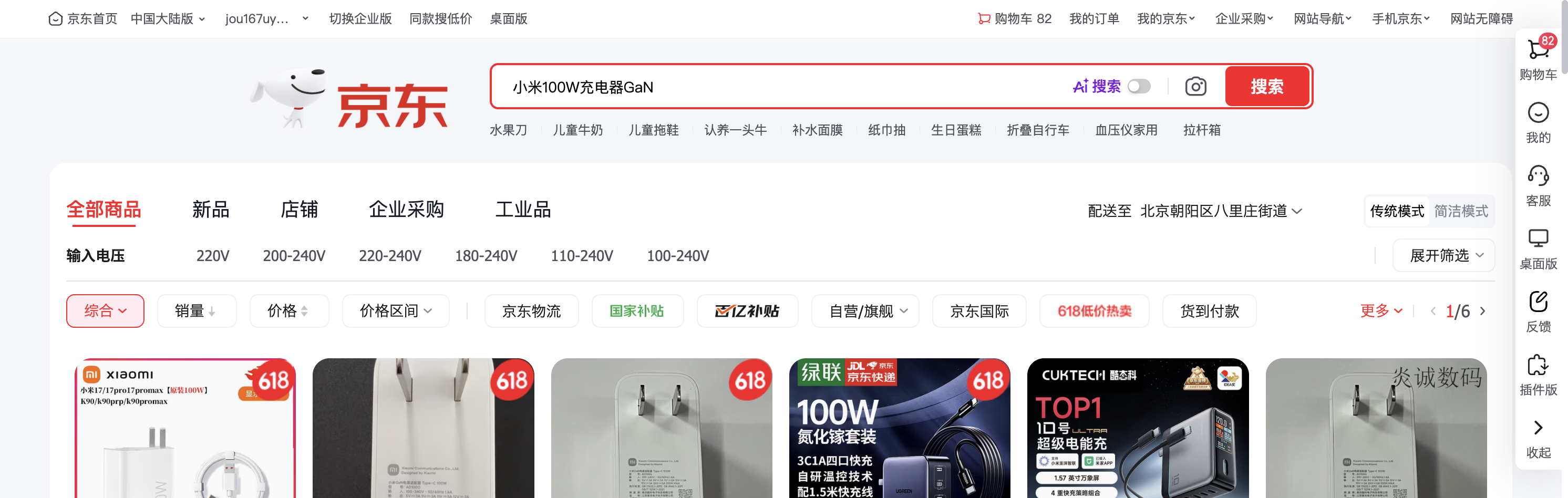
On JD.com, listings for the AD100G show a 92% positive rating across 100+ verified purchases from specialized accessory stores. Buyers consistently praise the compact size relative to output power and the versatility of the 1A1C port configuration. The charger isn’t widely stocked in the Xiaomi self-operated store — it’s primarily distributed through certified Xiaomi accessory channels — but the availability and price are stable.
Specifications
| Feature | Xiaomi AD100G | Xiaomi AD65G (65W) | Xiaomi MDY-13-ET (120W) |
|---|---|---|---|
| Price (JD) | ¥165 (~$23) | ¥114 (~$16) | ¥249 (~$34) |
| Max Output | 100W (single port) | 65W | 120W |
| Ports | 1×USB-C + 1×USB-A | 1×USB-C + 1×USB-A | 1×USB-C |
| Dual-Port Output | 65W + 18W (83W total) | 45W + 18W (63W) | N/A (single port) |
| Protocols | PD 3.0, QC 4+, PPS, AFC, FCP | PD 3.0, QC 3.0, PPS | Xiaomi HyperCharge, PD 3.0 |
| USB-C Output | 5V3A / 9V3A / 12V3A / 15V3A / 20V5A | 5V3A / 9V3A / 12V3A / 15V3A / 20V3.25A | 5V3A / 9V3A / 11V6A / 20V6A |
| USB-A Output | 5V3A / 9V2A / 12V1.5A (18W max) | 5V3A / 9V2A / 12V1.5A (18W max) | N/A |
| Technology | GaN (Gallium Nitride) | GaN | GaN |
| Dimensions | 62×61×29mm | 56×55×28mm | Not published |
| Weight | ~155g | ~100g | ~185g |
| Foldable Plug | Yes | Yes | No (fixed) |
| Certification | 3C, CE, FCC | 3C, CE, FCC | 3C |
Design and Build
The AD100G is slightly larger than its 65W sibling — think two stacked Oreo cookies versus one — but the difference is academic when you consider it replaces a laptop power brick. The matte white finish with subtle “100W” branding is classic Xiaomi minimalist. The folding plug is essential for travel — no snagging cables inside your bag.
The 1A1C port arrangement is the practical sweet spot. USB-C handles your laptop (65-100W), tablet, or fast-charging phone. USB-A covers legacy devices, wireless earbuds cases, or that one cable you haven’t upgraded to USB-C yet. When both ports are in use, power splits to 65W (USB-C) + 18W (USB-A) — enough to fast-charge a laptop and top up a phone simultaneously.
At 155g, it’s lighter than most 65W laptop chargers from five years ago. The GaN internals run cooler under load than silicon equivalents, which means less heat and better sustained output.
Charging Performance
The USB-C port delivers a full 100W via PD 3.0 (20V/5A) — enough to charge a MacBook Pro 14” at full speed, a Xiaomi Book Pro at max wattage, or a ThinkPad X1 Carbon at peak draw. In real terms: 0-50% on a Xiaomi 14 Ultra in about 18 minutes, and 0-50% on a Xiaomi Book Pro 16 in about 35 minutes.
PPS support (Programmable Power Supply) enables dynamic voltage/current negotiation for Samsung Galaxy devices and Google Pixel fast charging. QC 4+ backward compatibility covers older Qualcomm-powered phones. The charger also handles AFC (Samsung) and FCP/SCP (Huawei) protocols, making it genuinely universal.
GaN thermals mean the charger stays under 45°C at full 100W draw — warm to touch but never concerning. Over-current, over-voltage, and short-circuit protections are built in.
What Chinese Users Say
Aggregated Ratings: 92% positive on JD.com
The AD100G is primarily sold through certified Xiaomi accessory channels rather than the Xiaomi self-operated store. Two key JD listings:
- 纯原装电源适配器经营部: ¥165, 92% positive across 100+ verified reviews
- 炎诚数码经营部: ¥152.36, 100% positive (smaller review volume)
Common Themes from JD Buyer Feedback
Compact Size for Laptop Charging — JD buyers consistently note the AD100G’s surprisingly small footprint for a 100W charger, especially when compared to the OEM bricks that ship with Xiaomi Book Pro and other USB-C laptops. The folding plug and ~155g weight make it a popular travel pick.
Value vs Brand-Name Alternatives — The most frequent praise centers on price. At ¥152-165, the AD100G costs roughly half of comparable 100W GaN chargers from Anker (¥300+) and less than a third of premium models like the Nubia Red Magic 100W (¥464). JD reviewers frequently frame this as “same GaN technology, same protocols, half the price.”
Build Quality Impressions — The matte white finish and solid-feeling construction earn positive mentions. Buyers describe the build as surprisingly premium for the price point and note that the GaN internals keep the charger noticeably cooler than silicon-based alternatives under sustained 100W load.
Port Selection: Practical but Not Future-Proof — The 1A1C configuration gets the job done for most users — USB-C for laptops and tablets, USB-A for legacy accessories and power banks. However, a recurring wish in buyer feedback is for dual USB-C ports to better serve all-USB-C device ecosystems. This is the most consistent criticism across reviews.
Xiaohongshu Sentiment — On Xiaohongshu (RED), the AD100G appears in tech accessory roundups and “budget desk setup” posts. The community consistently compares it against the Anker 100W and UGREEN 100W as the value pick, with the consensus being that Xiaomi delivers equivalent core performance at a significant discount. The trade-off mentioned is the lack of premium packaging and included cable — Xiaomi keeps the box minimal to hit the price point.
Review Theme Summary
| Theme | JD Sentiment | Context |
|---|---|---|
| Value | Strongly positive | ¥152-165 vs Anker at ¥300+ for equivalent GaN 100W output |
| Size | Positive | Compact for 100W class; lighter than most laptop OEM bricks |
| Build Quality | Positive | Solid matte finish; GaN thermals praised |
| Port Selection | Mixed | 1A1C works but dual USB-C is a common request |
| Heat Management | Positive | Runs cooler than silicon chargers at full load |
| Accessories | Neutral | No included cable noted; 5A cable required for full 100W |
Pros & Cons
Pros:
- Full 100W USB-C PD output in a compact GaN body
- Dual-port (1C1A) handles laptop + phone simultaneously
- Folding plug for travel
- Universal protocol support (PD, QC, PPS, AFC, FCP)
- 3C safety certified with multi-layer protection
- Roughly 40-50% cheaper than Anker/Nomad equivalents
Cons:
- USB-A port feels dated in 2026 (should be dual USB-C)
- Non-self-operated availability — harder to find in Xiaomi official store
- No included cable (bring your own 5A USB-C cable for full 100W)
- Slightly bulkier than single-port 100W GaN chargers
- No PPS above 11V — Samsung 45W Super Fast Charging 2.0 requires PPS at higher voltage
vs Competitors
vs Anker 100W GaN (¥329): Anker uses dual USB-C ports (no legacy USB-A), has slightly better thermals, and comes with a premium feel. But at nearly twice the price, Xiaomi delivers the same core 100W PD output. Unless you absolutely need dual USB-C, the AD100G wins on value.
vs Xiaomi 65W GaN AD65G (¥114): The 65W model is smaller and cheaper but can’t fully power a laptop at 100W. If you charge phones and tablets only, save ¥51 and go 65W. If you charge a laptop regularly, the 100W is worth the upgrade.
vs Nubia Red Magic 100W GaN (¥464): Nubia’s transparent-shell gaming aesthetic and triple-port design are flashier, but the ¥299 premium is hard to justify for a charger.
FAQ
Q: Does it come with a cable? A: No — you need to supply your own USB-C cable. For full 100W output, use a cable rated for 5A (100W). Standard 3A cables will cap at 60W.
Q: Can it charge a MacBook Pro 16”? A: Yes, via USB-C PD at up to 100W. It won’t match the 140W maximum of Apple’s OEM charger, but 100W will charge the 16” MacBook Pro from 0-50% in about 45 minutes.
Q: Does it support Xiaomi HyperCharge (120W)? A: No — the AD100G uses standard PD 3.0, not Xiaomi’s proprietary HyperCharge protocol. Xiaomi phones that use HyperCharge (120W+) will charge at the standard PD rate (usually 27-65W depending on model).
Q: What’s the difference between AD100G and AD65G? A: AD100G outputs up to 100W from USB-C (single port) vs 65W on AD65G. Both are 1A1C GaN chargers. The AD100G is slightly larger and heavier.
Rating: 4.5/5
| Category | Score |
|---|---|
| Charging Speed | 9/10 |
| Port Selection | 7/10 |
| Build Quality | 8.5/10 |
| Value | 9.5/10 |
| Portability | 8/10 |
Buying Guide: Which 100W Charger Should You Get
✅ Best Value — Xiaomi AD100G (¥165): The best price-to-performance 100W charger on JD. Full PD 3.0 laptop charging with a spare USB-A port for legacy devices, at nearly half the Anker price. Ideal for laptop-first users who want one charger for everything.
💰 Premium Pick — Anker 100W Nano (¥329): Dual USB-C ports, slightly better thermals, premium build. Worth the premium only if you need dual USB-C or want the name-brand warranty experience.
⚠️ Budget Warning — Xiaomi AD65G (¥114): If you only charge phones and tablets, or don’t need full laptop-speed charging, the 65W model saves ¥51 and is even smaller. But it won’t fast-charge most laptops at full speed.
Verdict: For laptop owners who want a single compact charger, the AD100G is the value sweet spot — Xiaomi reliability at a price that makes the premium brands look overpriced.
Not sure which to choose?
Compare specs side-by-side with our Product Comparator Tool
Related Reviews

Anker GaN 65W Charger Review: The Ultimate Compact Laptop & Phone Charger?
Anker GaN 65W Charger review: 96% positive on JD with 200K+ reviews. GaN technology, 2x USB-C + 1x USB-A, compact design
Baseus GaN5 Pro 160W Charger Review: Affordable Power for 4 Devices
Baseus GaN5 Pro 160W review: 4-port GaN charger with GaN5 Pro & BPS 2.0 tech. 98% positive on JD, compact design, charge

CUKTECH No.6 140W GaN Charging Station Review: Desktop Power Done Right
CUKTECH No.6 140W GaN charging station review: 4-port desktop charger with LED display, PD 3.1, and smart power distribu

Xiaomi Mi Car Charger 100W Review: Fast Charge Your Whole Family on the Road
Xiaomi Mi Car Charger 100W review: 96% positive on JD with 200K+ reviews. Dual USB-C + USB-A, 100W total output, GaN tec
Xiaomi GaN Charger 65W (AD65G) Review — The Charger That Started It All, Still Worth It in 2026?
Xiaomi's AD65G GaN charger remains a legendary budget option with 30,000+ JD.com reviews and 91% positive rating. We com