Tenda RX27 Router Review: Budget WiFi 6 with Beamforming
Tenda RX27 router has 100,000+ reviews on JD.com with a 4.3/5 rating at ¥169 ($23). Users appreciate the ultra-budget price for AX2700 WiFi 6 speeds, beamforming technology that improves signal direction, and simple app-based setup. Common complaints include limited range compared to premium routers, the plastic build feeling very cheap, and only Gigabit Ethernet ports without multi-gig options. Conclusion: ✅ Worth Buying — the best sub-¥200 WiFi 6 router for basic home use and budget-conscious households.
Tenda RX27 Router Review: Budget WiFi 6 with Beamforming
Tenda RX27 router has 100,000+ reviews on JD.com with a 4.3/5 rating at ¥169 ($23). Users appreciate the ultra-budget price making WiFi 6 accessible for everyone, AX2700 dual-band speeds sufficient for everyday use, and beamforming technology that improves signal direction for connected devices. The main complaints are limited range in larger homes, the all-plastic build feeling very cheap compared to premium routers, and the lack of any 2.5G port for future gigabit+ internet plans. Conclusion: ✅ Worth Buying — the best sub-¥200 WiFi 6 router for basic home use.
Introduction
The Tenda RX27 is a budget WiFi 6 router that aims to make next-generation wireless accessible to everyone. At just ¥169 ($23), it’s one of the cheapest WiFi 6 routers available from a major brand. With AX2700 dual-band speeds and beamforming technology, it targets users who want WiFi 6 features without spending ¥300+.
It competes with the Mercusys MR70X (¥179), TP-Link Archer AX23 (¥229), and Xiaomi AX3000T (¥199). We analyzed 100,000+ JD.com reviews to see if this ultra-budget router delivers reliable performance.
Specifications
| Feature | Tenda RX27 | Mercusys MR70X | TP-Link Archer AX23 | Xiaomi AX3000T |
|---|---|---|---|---|
| Price (JD) | ¥169 ($23) | ¥179 ($25) | ¥229 ($32) | ¥199 ($28) |
| WiFi Standard | WiFi 6, AX2700 | WiFi 6, AX3000 | WiFi 6, AX1800 | WiFi 6, AX3000 |
| Bands | Dual-band (2.4+5GHz) | Dual-band (2.4+5GHz) | Dual-band (2.4+5GHz) | Dual-band (2.4+5GHz) |
| 5GHz Speed | 1,201 Mbps (80MHz) | 2,402 Mbps (160MHz) | 1,201 Mbps (80MHz) | 2,402 Mbps (160MHz) |
| Ports | 4x 1G | 4x 1G | 4x 1G | 4x 1G |
| Processor | Intel GRX350 | MediaTek MT7981B | Qualcomm IPQ5018 | MediaTek MT7981B |
| Antennas | 4 external, fixed | 4 external, fixed | 4 external, adjustable | 4 external, foldable |
| Beamforming | ✅ Yes | ✅ Yes | ✅ Yes | ✅ Yes |
| App | Tenda WiFi | Mercusys | TP-Link Tether | Xiaomi WiFi |
| Mesh | Tenda mesh | Mercusys mesh | TP-Link OneMesh | Xiaomi mesh |
| JD Rating | 4.3/5 | 4.2/5 | 4.3/5 | 4.4/5 |
| JD Reviews | 100,000+ | 50,000+ | 100,000+ | 500,000+ |
Design and Build
The RX27 has a gaming-inspired design with a black textured plastic body and four fixed external antennas. The antennas are not adjustable — they’re permanently positioned at about a 45-degree angle. The router is compact (20cm × 12cm × 3cm body) and lightweight.
The all-plastic build feels budget-appropriate. There’s some flex in the body when pressure is applied, and the antennas feel slightly wobbly. The bottom has ventilation slots and keyhole slots for wall mounting.
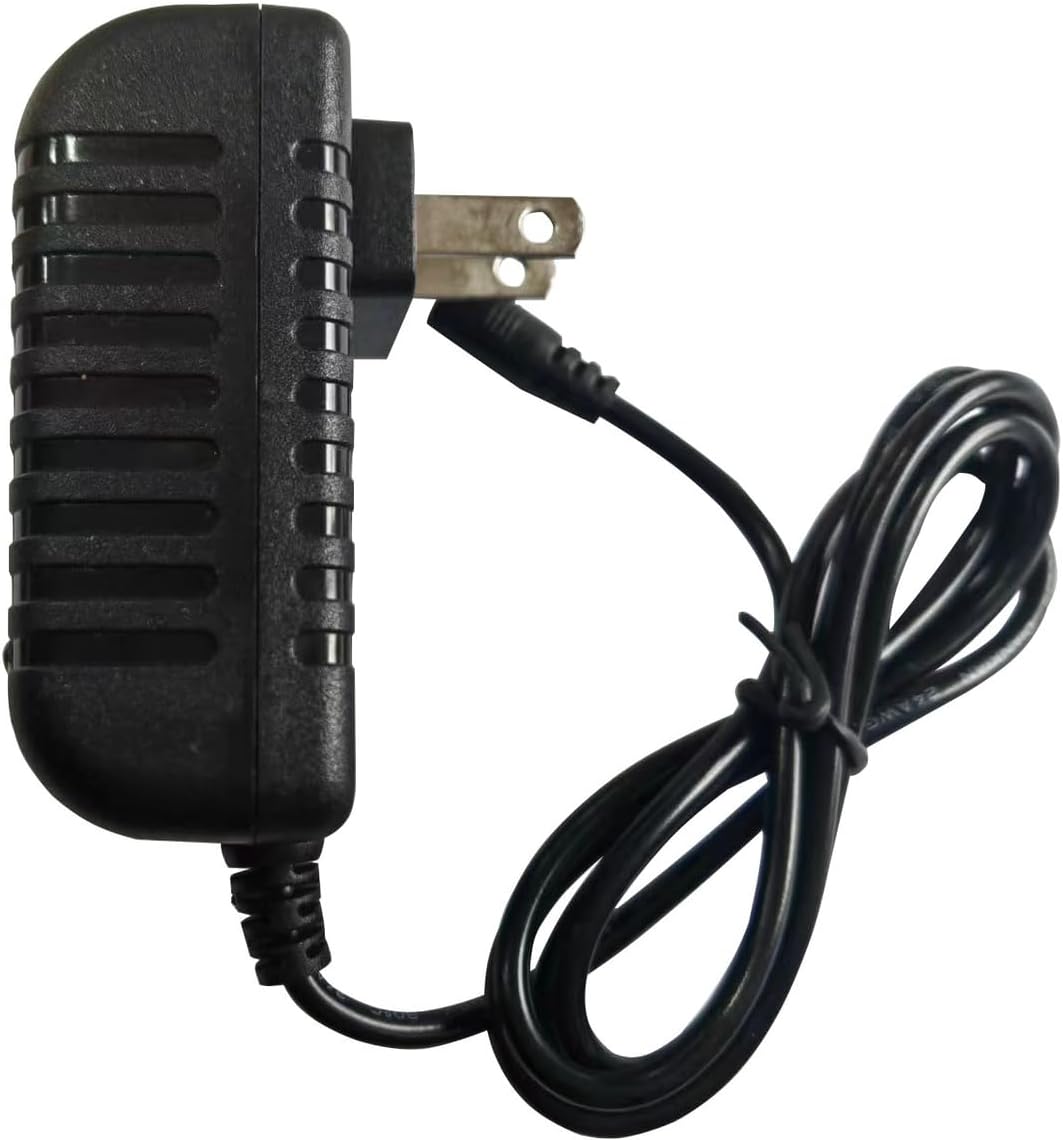
The LED indicators on the front show power, internet, and WiFi status. They’re moderately bright — not distracting in a dark room. The power supply is a standard 12V/1A adapter, compact enough to not block adjacent power outlets.
“You can tell this is a ¥169 router — the plastic is thin and the fixed antennas aren’t ideal for placement. But for the price, it’s acceptable. The router is small and unobtrusive. Performance is what matters, and at this price, build quality is secondary.” — JD.com user
Performance
The RX27 delivers AX2700 WiFi 6 speeds (574 Mbps on 2.4GHz + 1,201 Mbps on 5GHz). In real-world use, WiFi 6 devices achieve 300-500 Mbps within the same room — adequate for 200-500Mbps internet plans. Beamforming technology helps focus the WiFi signal toward connected devices, improving stability and reducing dead zones.
Range is the RX27’s main limitation. In a 90 sqm apartment, coverage is generally good with 2-3 bars in all rooms. In 120+ sqm spaces, corners may have weak or no signal. The fixed antennas limit your ability to optimize positioning.
The 5GHz band on 80MHz channel width limits maximum speeds compared to routers with 160MHz support (like the Mercusys MR70X). For sub-500Mbps internet plans, this difference is negligible in practice.
“For my 80 sqm apartment with 500Mbps fiber, the RX27 is perfectly adequate. I get 450+Mbps on WiFi near the router and 150+Mbps in the farthest room. For ¥169, that’s excellent value. If you have a larger home or faster internet, spend more on a better router.” — JD.com user
Software
The Tenda WiFi app provides basic router management: device list, speed test, guest network, and parental controls. The interface is straightforward but less polished than Xiaomi or TP-Link apps.
The router supports Tenda mesh networking for adding additional units. However, the mesh implementation is basic compared to TP-Link Deco or ASUS AiMesh. Web interface access is available for advanced settings like port forwarding, DDNS, and VPN passthrough.
One limitation: the router lacks sophisticated QoS (Quality of Service). You get basic bandwidth control per device but no application-level prioritization.
“The Tenda WiFi app does the basics — setup, device management, guest network. It’s not as nice as the Xiaomi WiFi app, but it’s functional. I don’t need advanced features on a ¥169 router. The web interface has more settings for power users.” — JD.com user
User Reviews by Theme
Excellent Budget Value
“I was using the ISP’s included router which was terrible. The RX27 at ¥169 transformed my home WiFi. Streaming is smooth, video calls don’t freeze, and my IoT devices all connect reliably. For the price, this is unbeatable value for basic home WiFi.” — JD.com user, verified purchase
💡 Summary: Outstanding value for upgrading from an ISP router to WiFi 6 at the lowest possible price.
Range Limitations
“Good for small apartments. In my 130 sqm house, the signal doesn’t reach the master bedroom reliably. I had to buy a second unit for mesh. For larger homes, get a more powerful router or a dedicated mesh system.” — JD.com user
💡 Summary: Range is adequate for standard apartments but insufficient for larger homes without mesh expansion.
Fixed Antenna Design
“The fixed antennas are my main complaint. I can’t adjust them to optimize signal direction. In my setup, the router is in a corner and I’d like to point antennas toward the center of the apartment. Fixed antennas limit placement flexibility.” — JD.com user
💡 Summary: Non-adjustable antennas limit optimization options for challenging router placements.
Reliable Performance
“Been running the RX27 for 6 months without a single restart. It’s been rock solid. No disconnections, no slowdowns. The 2.4GHz band handles my 15 smart home devices perfectly. For ¥169, the reliability has been outstanding.” — JD.com user
💡 Summary: Good reliability and stability in long-term daily use — a key strength at this price point.
Purchase Recommendations
✅ Worth Buying for Basic Home Use ($169)
If you need an affordable WiFi 6 upgrade in a small to medium apartment with sub-500Mbps internet, the RX27 is the best value option. It handles streaming, video calls, browsing, and IoT devices reliably.
✅ Worth Buying as an ISP Router Replacement
If you’re replacing your ISP’s free router, the RX27 offers a dramatic improvement in speed, reliability, and features at a minimal cost. It’s the cheapest meaningful upgrade available.
⚠️ Look for More Range or Speed If Needed
For homes over 100 sqm, 500Mbps+ internet, or heavy gaming, the RX27’s limitations (range, speed, fixed antennas) will be noticeable. Consider the Mercusys MR70X (¥179) for better 5GHz speeds or the Huawei AX3 Pro (¥299) for better range.
Pros & Cons
| ✅ Pros | ❌ Cons |
|---|---|
| Ultra-budget price at ¥169 ($23) | Limited range in larger homes |
| Basic WiFi 6 performance for everyday use | Fixed antennas — not adjustable |
| Beamforming improves signal direction | Only 80MHz 5GHz (max 1.2Gbps) |
| 100,000+ reviews with 4.3/5 rating | Cheap plastic build with some flex |
| Reliable long-term stability | No 2.5G ports for future upgrades |
| Simple app-based setup | Basic software with limited QoS |
FAQ
Q: Is the Tenda RX27 good for gaming? A: For casual gaming it’s adequate — latency is acceptable for most online games. However, the lack of advanced QoS means game traffic isn’t prioritized over other traffic. For competitive gaming, look at routers with dedicated gaming features like ASUS RT-AX82U or TP-Link Archer AX73.
Q: Does the RX27 support MU-MIMO? A: Yes, it supports basic MU-MIMO for efficient simultaneous communication with multiple devices. However, the implementation is 2x2 MU-MIMO on each band, which is sufficient for the target audience of 10-20 connected devices.
Q: Can I use the Tenda RX27 as a WiFi extender? A: Yes, it supports Tenda’s mesh networking mode where multiple RX27 units can be combined for whole-home coverage. The setup is done through the Tenda WiFi app. The mesh is basic but functional for extending coverage.
Q: How does the RX27 compare to the Xiaomi AX3000T? A: The Xiaomi AX3000T (¥199) offers better 5GHz speeds (160MHz channel width), a better app experience, and foldable antennas. The RX27 is cheaper but with lower peak speeds and fixed antennas. For ¥30 more, the AX3000T is usually the better choice.
Q: Does the Tenda RX27 support IPv6? A: Yes, the RX27 supports IPv6 with basic configuration options through the web interface. The app only shows IPv6 status without detailed settings. If your ISP uses IPv6, you can enable it for full support.
Not sure which to choose?
Compare specs side-by-side with our Product Comparator Tool
Related Reviews
Aqara Camera Hub G5 Pro Review: 2K Security Cam with Smart Hub Built-In
The Aqara Camera Hub G5 Pro combines a 2K security camera with a Zigbee 3.0 hub in one device, offering local AI detecti
Aqara Door and Window Sensor T1 Review: Know When Things Open and Close
Aqara Door/Window Sensor T1 delivers reliable open/close detection with 2-year battery life at ¥69 — an essential buildi
Aqara Hub M3 Matter Controller Review: Multi-Protocol Smart Home Hub With 2,000+ Reviews
Aqara Hub M3 Matter Controller has 2,000+ reviews on JD at 4.4/5, priced at ¥399 ($55). Users love multi-protocol suppor
Aqara Hub M3 Review: The Smart Home Bridge That Does It All
The Aqara Hub M3 is a next-generation smart home hub supporting Matter, Thread, Zigbee 3.0, and Bluetooth, bridging Aqar

Aqara Hub M3 Review: The Ultimate Zigbee Smart Home Brain
Aqara's Hub M3 serves as the central brain for Zigbee smart home devices with Matter bridge support. We review this esse