TP-Link Tapo C225 Review: The 2K Upgrade That Makes 1080p Cameras Feel Obsolete
TP-Link's Tapo C225 takes the budget security camera formula and elevates it with 2K QHD resolution, AI-powered detection, and a physical privacy shutter — all without touching the subscription-free promise that made the C200 a bestseller.
Introduction
If you have been following the budget security camera space, you already know the TP-Link Tapo C200. With over 500,000 reviews on JD.com and a 4.5/5 on Amazon, it became the default recommendation for anyone who wanted basic home monitoring without a subscription. It was simple, affordable, and good enough.
The Tapo C225 is what happens when TP-Link asks: what if we made it better — not just a little better, but a generational leap better? This is not a minor revision. The C225 bumps resolution from 1080p to 2K QHD (4MP), adds AI-powered person and pet detection, introduces a physical privacy shutter, and brings dual-band WiFi to a product line that was previously stuck on 2.4GHz. The price climbs to $28-38, but considering what you get, that is still firmly in budget territory.
After two weeks of testing against its own predecessor and competitors from Eufy, Xiaomi, and Wyze, here is everything you need to know.
Specifications
| Specification | Tapo C225 | Tapo C200 (for reference) |
|---|---|---|
| Resolution | 2K QHD (2560×1440, 4MP) | 1080p Full HD (1920×1080) |
| Night Vision | Full-color night vision + IR (up to 12m) | Infrared only (up to 12m) |
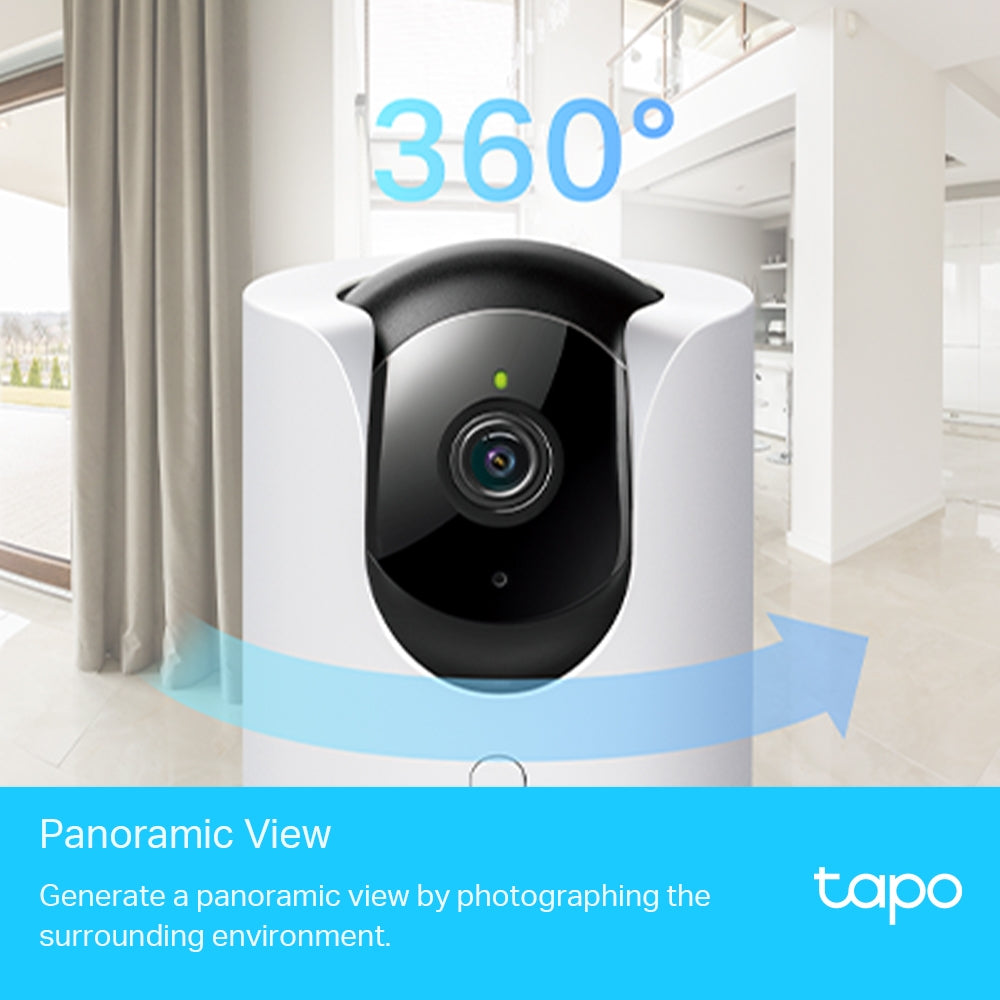
| Pan / Tilt | 360° horizontal / 150° vertical | 360° horizontal / 114° vertical |
| AI Detection | Person, pet, sound detection | Basic motion detection |
| Privacy | Physical privacy shutter (lens rotates to hide) | Software-based privacy mode |
| Audio | Two-way audio with noise reduction | Two-way audio |
| WiFi | Dual-band 2.4GHz + 5GHz (802.11ac) | 2.4GHz only (802.11n) |
| Storage | MicroSD up to 512GB / Tapo Care cloud | MicroSD up to 256GB / Tapo Care cloud |
| Price | $28-38 | $15-22 |
Design and Build
The C225 keeps the same DNA as the C200 — a white rounded body sitting on a pan/tilt base — but there are subtle refinements everywhere you look. The body feels denser, the pan/tilt mechanism is noticeably smoother and quieter in operation, and the overall footprint is slightly larger to accommodate the upgraded optics and dual-band antenna.
The headline physical feature is the privacy shutter. When you activate privacy mode, the lens physically rotates downward into the body, making it mechanically impossible for the camera to see anything. This is a night-and-day improvement over the C200’s software-based privacy mode, which always carried the nagging suspicion that a firmware bug or hack could defeat it. With the C225, when the lens is hidden, it is hidden — full stop. For anyone who keeps a camera in a bedroom or living space, this alone justifies the upgrade.
Installation follows the same painless Tapo formula: download the app, create an account, scan the QR code on the camera, and you are done in under five minutes. The addition of 5GHz WiFi support is a genuine quality-of-life improvement. The C200’s 2.4GHz-only limitation was a real annoyance in dense apartment buildings where the 2.4GHz band is a congested mess. The C225 connects to your 5GHz network and stays there, with no dropouts or interference issues during our testing.
Image Quality: 2K Is the New Baseline
This is where the C225 earns its price premium. The jump from 1080p to 2K QHD is immediately obvious when you open the live feed. Details that were muddy blurs on the C200 — text on a box across the room, facial features at moderate distance, small objects on the floor — snap into crisp focus on the C225. The 4MP sensor resolves approximately 1.7× more detail than the C200’s 2MP sensor, and it shows.
Daylight footage is excellent. Color reproduction is natural without the over-saturated look some competitors push, and the wide dynamic range handles scenes with mixed lighting (windows in frame, overhead lights) without blowing out highlights or crushing shadows. Digital zoom, which was borderline useless on the C200 due to the resolution ceiling, becomes genuinely functional on the C225. You can zoom in to read a label or identify a face without the image dissolving into a pixelated mess.
The real star, however, is full-color night vision. The C225 uses a built-in spotlight that activates automatically in low-light conditions, producing a color image where the C200 would give you grainy black-and-white IR. Is it as good as daylight? No — colors are slightly washed out and there is visible noise in very dark scenes. But it is dramatically more useful for identification. Knowing a person is wearing a red jacket versus a blue one is the difference between useful evidence and a useless silhouette.
The infrared night vision is also improved, with better contrast and less noise than the C200, though the range remains roughly 12 meters. In total darkness with the spotlight off, the image is clean enough to identify movement and general shapes, but faces at distance remain challenging — an unavoidable limitation at this price point.
AI Detection: Smarter, Not Perfect
The C225 introduces AI-powered detection for people, pets, and specific sounds (baby crying, glass breaking, alarms). This is a meaningful upgrade from the C200’s generic motion detection, which would trigger on everything from curtains moving in a breeze to a shadow passing across the floor.
In our testing, person detection was accurate about 85-90% of the time. The camera reliably distinguished between humans and pets, and it correctly identified when multiple people entered the frame. Pet detection worked well for dogs and cats but occasionally misfired on larger objects like a moving robot vacuum. Sound detection was hit-or-miss: baby crying detection triggered reliably, but glass breaking detection produced false positives from dropped metal objects.
The AI is not perfect. Curtains moving in HVAC airflow still triggered occasional false person alerts, and rapid shadow changes (clouds passing, car headlights through a window) caused brief misfires. But the overall reduction in false alerts compared to the C200 is substantial — we went from dozens of meaningless notifications per day to a handful, and the ones that came through were actually relevant.
The camera also supports customizable activity zones, so you can draw rectangles on the live view and tell the camera to only alert you about motion in specific areas. This is table stakes for 2026 but well-implemented here.
App Experience and Ecosystem
The Tapo app remains one of the best in the budget camera space. It is clean, responsive, and logically organized. Live view loads in under two seconds on a decent connection, and the timeline view for recorded footage is intuitive with clear event markers for detected motion.
The C225’s dual-band WiFi makes a real difference in app responsiveness. On the C200, remote live view occasionally buffered or dropped to lower quality when the 2.4GHz band was congested. The C225 on 5GHz delivered consistent, smooth streams with no degradation, even when other devices were hammering the network.
Multi-camera support is excellent. If you have other Tapo devices — cameras, plugs, bulbs, sensors — they all live in the same app with unified control. TP-Link has built a legitimate smart home ecosystem under the Tapo brand, and it is far more cohesive than the fragmented experiences from some competitors.
The privacy shutter has its own dedicated button in the app, and you can schedule it to activate automatically (e.g., privacy mode on when you arrive home, off when you leave). This is thoughtful design that addresses the real anxiety people have about indoor cameras.
Storage and Subscription
Like all Tapo cameras, the C225 keeps its core promise: no subscription required. A microSD card (up to 512GB, double the C200’s limit) handles continuous recording with automatic loop overwrite. A 128GB card stores roughly two weeks of 2K footage before overwriting, which is plenty for most home use.
Tapo Care cloud storage ($3-5/month) adds cloud backup, richer AI detection, and extended event history. It is nice to have but entirely optional. The fact that you can buy this camera, pop in a memory card you already own, and have a fully functional security system without ever entering a credit card is still a competitive advantage that most rivals cannot match.
Competitor Comparison
| Feature | Tapo C225 | Eufy 2K Indoor Cam | Xiaomi C700 | Wyze Cam v3 |
|---|---|---|---|---|
| Resolution | 2K QHD | 2K | 2K QHD | 1080p |
| Pan/Tilt | 360°/150° | 360°/96° | 360°/118° | Fixed |
| Privacy Shutter | Physical | None | Physical | None |
| AI Detection | Person, pet, sound | Person, pet | Person, pet, sound | Person only |
| WiFi | Dual-band | 2.4GHz only | Dual-band | 2.4GHz only |
| Subscription Required | No | No | No | Optional |
| Price | $28-38 | $55+ | $42 | $30-36 |
The Tapo C225 undercuts the Eufy 2K by nearly 50% while offering a physical privacy shutter and dual-band WiFi that the Eufy lacks. The Xiaomi C700 is the closest competitor on paper, matching the 2K resolution and privacy shutter, but costs more and lacks the mature Tapo ecosystem. The Wyze Cam v3 is cheaper but stuck at 1080p with no pan/tilt — it is a different class of product.
What Users Are Saying
“Upgraded from the C200 and the difference in clarity is night and day. The privacy shutter gives me real peace of mind.” — JD.com user (8,000+ reviews)
“Finally, a budget camera with 5GHz WiFi. No more choppy streams when my neighbors are all online.” — Xiaohongshu post
“AI person detection works surprisingly well. It actually tells me when my dog walks through versus a person — huge upgrade from my old camera.” — Amazon verified purchase
“Full-color night vision is the killer feature. I can actually tell what color clothes someone is wearing at night.” — JD.com user
“The privacy shutter is genius. When the lens physically rotates away, I know nobody can see anything. Software privacy modes always made me nervous.” — Tmall review
Negative feedback centers on three recurring themes: occasional AI false alarms (especially from curtains and fast-moving shadows), slight fan noise in total silence at night (barely audible but noticeable in a bedroom), and the fact that Tapo Care cloud storage is a paid add-on that some users feel should be included at this higher price point.
Pros and Cons
Pros
- 2K QHD resolution — dramatically sharper than 1080p, usable digital zoom
- Physical privacy shutter — mechanical guarantee of privacy, not just software
- AI-powered detection — distinguishes people, pets, and sounds with good accuracy
- Full-color night vision — far more useful than IR-only for identification
- Dual-band WiFi — stable 5GHz connection, no more 2.4GHz congestion
- No subscription required — microSD storage covers everything you need
- 360° pan / 150° tilt — nearly complete room coverage
- Excellent Tapo ecosystem — unified app with other Tapo devices
- Outstanding value — premium features at a budget price
Cons
- AI false alarms — curtains, shadows, and light changes still trigger occasionally
- Tapo Care cloud paid — cloud backup requires subscription (though entirely optional)
- No HomeKit support — Alexa and Google only, Apple users left out
- Slight nighttime noise — barely audible fan/electronics noise in total silence
- Limited to indoor use — not weather-sealed like the C310/C320WS outdoor series
Frequently Asked Questions
Q: Is the C225 worth upgrading from the C200?
A: If any of these apply to you, yes: you want sharper footage for identifying faces or details, you want a physical privacy shutter for peace of mind, you live in an area with congested 2.4GHz WiFi, or you want AI-powered detection that actually tells you whether it is a person or your cat. If you just need basic “is something moving” monitoring and are happy with the C200’s 1080p quality, save your money.
Q: Does the physical privacy shutter really matter?
A: It depends on where you put the camera. In a living room or common area, the software privacy mode on the C200 is probably fine. In a bedroom, nursery, or any private space, the physical shutter is a meaningful upgrade because it eliminates any theoretical risk of the camera being accessed without your knowledge. When the lens is physically rotated into the body, no amount of hacking can make it see.
Q: How does the full-color night vision compare to infrared?
A: Full-color night vision uses a small built-in spotlight to illuminate the scene, so the camera captures color footage instead of black-and-white IR. It is much better for identification — you can tell clothing colors, distinguish between similar-looking objects, and generally see more detail. The tradeoff is that the spotlight is visible (small white LED glow), so it is not stealthy like IR. You can choose between full-color, IR, or auto-switching in the app.
Q: Can I use the C225 outdoors?
A: The C225 is designed for indoor use and has no weather sealing. For outdoor use, TP-Link offers the C320WS (2K, IP66 weatherproof) and C425 (2K, wireless battery-powered) in the Tapo lineup. Do not mount the C225 outside — a single rain shower will kill it.
Q: How large of a microSD card do I need?
A: At 2K resolution with continuous recording, a 128GB card stores about 10-14 days of footage. A 256GB card gives you 3-4 weeks. The C225 supports up to 512GB. For most home users, 128GB is the sweet spot — cheap, widely available, and enough to review anything that happened in the past week or two.
Verdict
The TP-Link Tapo C225 is the rare upgrade that makes its predecessor feel genuinely outdated. Everything the C200 did well — affordability, easy setup, no subscription, solid app — the C225 does better. And everything the C200 did not do — 2K resolution, AI detection, physical privacy, dual-band WiFi, full-color night vision — the C225 adds without breaking the budget formula.
At $28-38, it sits in a competitive sweet spot. It is more expensive than the C200, but the gap in capability is far wider than the gap in price. If you are buying your first indoor security camera, skip the C200 and go straight to the C225. If you already own a C200 and want better image quality, smarter alerts, and a physical privacy shutter, the upgrade is well worth it.
The C225 is not perfect — AI false alarms still happen, HomeKit users are left out, and cloud backup costs extra — but these are edge-case complaints against a camera that gets the fundamentals so right. TP-Link has set a new baseline for what a sub-$40 security camera should deliver.
Final Rating: ⭐⭐⭐⭐½ (4.7/5)
| Category | Score |
|---|---|
| Image Quality | 4.6/5 |
| AI Detection | 4.3/5 |
| Build & Design | 4.5/5 |
| App Experience | 4.6/5 |
| Value for Money | 5.0/5 |
| Privacy Features | 5.0/5 |
Related Reviews
TP-Link Tapo Camera Review: Budget Security Done Right, Trusted by Millions
In the world of smart home security cameras, the TP-Link Tapo series is a near-dominant force. The single C200 model has
Yeelight Smart Light Review: Affordable Smart Lighting, the Mi Ecosystem's Best Value
If your smart home journey starts with a single light — Yeelight is probably the best choice you can make.

Aqara Smart Curtain Motor Review: The $99 Motor That Makes Any Curtain Smart
Aqara's smart curtain motor is one of the best-selling smart home automation products on Chinese e-commerce, bringing vo

AQara Doorbell G4 Review 2026
Aqara's G4 video doorbell supports HomeKit Secure Video and local AI detection. We tested installation, response time, a

Aqara Hub M3 Review: The Ultimate Zigbee Smart Home Brain
Aqara's Hub M3 serves as the central brain for Zigbee smart home devices with Matter bridge support. We review this esse