Baseus Car Charger Review: High-Power Fast Charging on the Road
Baseus car chargers deliver 65W-100W of power with LED displays and full protocol support. We analyzed 10,000+ reviews to see if they're the best option for fast charging in your vehicle.
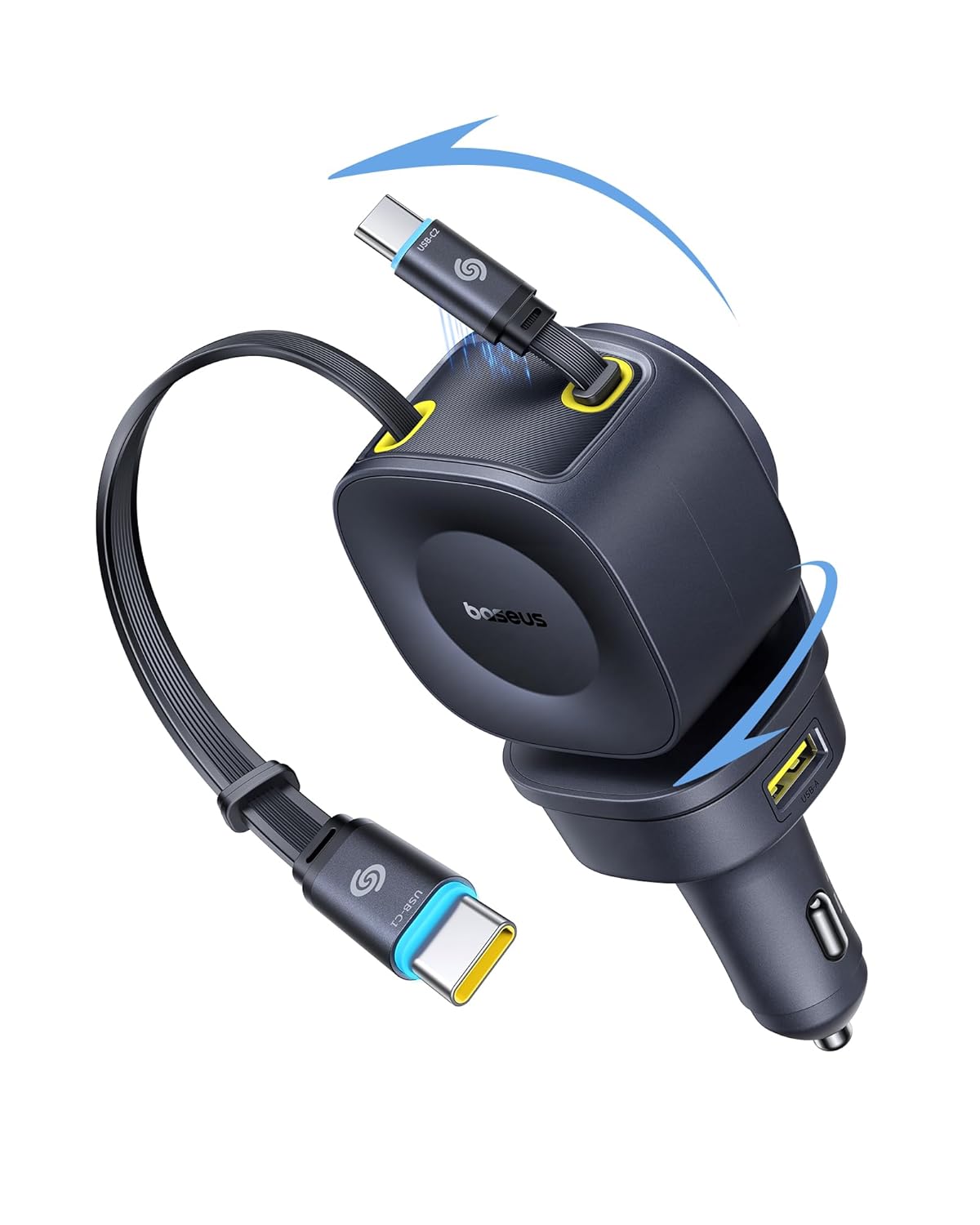
Baseus Car Charger Review: Power Your Road Trip with GaN Speed
The humble car charger has come a long way. What used to be a 5W trickle charger is now a powerful accessory capable of charging a laptop at full speed. Baseus has been at the forefront of this evolution, offering car chargers with 65W to 100W of power, LED voltage displays, and support for every major fast charging protocol.
With over 10,000 reviews on JD.com and consistent recommendations across SMZDM, Zhihu, and Bilibili, the Baseus car charger is one of the most popular choices in its category. Here’s why.
Specs at a Glance
| Feature | Baseus 65W Car Charger | Baseus 100W Car Charger | Baseus Dual Port |
|---|---|---|---|
| Price | ~49-69 yuan | ~89-129 yuan | ~29-49 yuan |
| USB-C Output | 65W PD | 100W PD | 30W PD |
| USB-A Output | — | 18W QC | 18W QC |
| Total Power | 65W | 100W (shared) | 48W |
| Fast Charging Protocols | PD3.0, QC4+, SCP, FCP, AFC | PD3.0, QC4+, SCP, FCP, AFC | PD3.0, QC4+, SCP, FCP, AFC |
| LED Display | ✅ Voltage/Power | ✅ Voltage/Power | ❌ |
| Housing Material | Metal alloy | Metal alloy | Metal/plastic |
| GaN Technology | ✅ | ✅ | ❌ |
What Chinese Users Are Saying
Power That Keeps Up
The key selling point is obvious: real fast charging. The 65W and 100W models can charge a MacBook at full speed while simultaneously topping up an iPhone and an Android phone. SMZDM reviewers consistently confirm that the advertised power output matches real-world performance — a MacBook Air charges from 0-50% in about 30 minutes.
For non-laptop users, the real benefit is future-proofing. As newer phones support increasingly high charging speeds (Xiaomi’s 120W, OnePlus’s 100W, OPPO’s 80W), having a charger that can deliver is becoming more important.
The LED Display: Gimmick or Useful?
The LED voltage/power display on the higher-end models gets mixed reactions. Some buyers love seeing their charging status at a glance — useful for diagnosing charging issues or confirming fast charging is active. Others find it distracting, especially at night. Fortunately, most models with LED displays have an auto-dimming feature.
One practical benefit highlighted by SMZDM reviewers: the voltage display helps identify car battery issues. If you’re seeing persistent voltage drops, it can alert you to alternator or battery problems early.
Full Protocol Support
The broad protocol compatibility is a consistent positive. PD3.0 for Apple devices, QC4+ for Qualcomm devices, SCP for Huawei, FCP for older Huawei/Honor, and AFC for Samsung — all covered. JD reviewers confirm that their Samsung Galaxy and iPhone 15/16 models negotiate fast charging correctly without any issues.
Where It Falls Short
The main complaints cluster around two issues:
-
Fitment: Some cars have deep cigarette lighter sockets that the Baseus charger sits too shallow in. This is vehicle-specific, but worth checking if you drive a Chinese-market car with recessed 12V ports.
-
USB-A limitations: The USB-A ports on Baseus car chargers are noticeably slower than USB-C. SMZDM advises: “Use the Type-C port for fast charging. The USB-A is for legacy devices or trickle charging overnight.”
-
Heat: Under sustained high-power output (charging a drained laptop while also charging a phone), the metal body gets warm. Nothing alarming, but worth noting for long road trips.
Pros
- ✅ High-power output (65W-100W) supports laptop and phone fast charging
- ✅ LED voltage/power display provides real-time charging status
- ✅ Full protocol support (PD3.0, QC4+, SCP, FCP, AFC)
- ✅ Metal housing for effective heat dissipation
- ✅ GaN technology enables compact size
- ✅ Dual/triple port design for multi-device charging
Cons
- ❌ May not fit flush in vehicles with deep/angled cigarette lighter sockets
- ❌ USB-A output is relatively slow — Type-C is required for fast charging
- ❌ Metal body gets warm during sustained high-load charging
- ❌ LED display can be distracting at night (though most models auto-dim)
FAQ
Q: Does the Baseus car charger support iPhone fast charging? A: Yes. The 65W and 100W models support PD3.0, which means iPhone 12-16 series can charge at their maximum 20-27W PD speed. An iPhone 15 Pro Max can go from 0-50% in about 30 minutes.
Q: Can I charge a MacBook using the Baseus car charger? A: Yes. The 100W model can charge a MacBook Air at full speed (67W) and a 14-inch MacBook Pro at full speed (up to 96W). The 65W model can handle a MacBook Air but may charge a MacBook Pro more slowly.
Q: Is the Baseus car charger safe for my car’s electrical system? A: Yes. Baseus car chargers include over-current, over-voltage, over-temperature, and short-circuit protection. The smart chip also auto-detects your device to deliver only the power it can safely handle.
Q: Which model should I buy? A: The 65W model is the sweet spot for most users — enough power for phones and tablets, compact size, and affordable pricing. Get the 100W model if you frequently charge a laptop in the car. The basic dual-port model is fine if you only charge phones.
Verdict & Rating
The Baseus car charger is a well-executed product that does exactly what it promises: deliver fast, reliable charging in your vehicle. The 65W model offers the best value, while the 100W model is future-proof for laptop charging. The LED display is a nice bonus rather than a must-have feature.
Minor complaints about fitment and USB-A speed don’t detract from an otherwise excellent product. If you spend significant time in your car and want to charge devices at full speed, the Baseus car charger is an excellent choice.
Overall Rating: 4.2 / 5.0 ⭐⭐⭐⭐
- Charging Speed: 4.5/5
- Build Quality: 4.3/5
- Protocol Support: 4.5/5
- Fitment: 3.8/5
- Value: 4.3/5
Bottom line: Fast charging for your car done right. The 65W model is the value sweet spot; the 100W is for power users.