Neewer 2.4G Wireless Flash Trigger Review: Budget Remote Flash Control
The Neewer 2.4G Wireless Flash Trigger offers 16-channel control for off-camera flash at ¥139 ($19). Rated 4.2/5 on JD.com with 9,500+ reviews. The cheapest reliable alternative to Godox triggers for hobbyist photographers.
Neewer 2.4G Wireless Flash Trigger Review: Budget Remote Flash Control
The Neewer 2.4G Wireless Flash Trigger has 9,500+ reviews on JD.com with a 4.2/5 rating at ¥139 ($19). Users appreciate the affordable price, reliable 16-channel communication, and compatibility with most standard flash units. The main complaints are the plastic build, limited range in challenging conditions, and no TTL support. Conclusion: ⚠️ Budget Warning — good for manual flash beginners, but serious shooters should invest in Godox.
Introduction
Wireless flash triggers are essential tools for anyone working with off-camera flash, but the premium offerings from Godox and PocketWizard can be expensive. Neewer’s 2.4G Wireless Flash Trigger aims to bridge the gap, offering basic wireless flash triggering at a fraction of the price. It’s designed for hobbyist photographers and beginners who want to explore off-camera lighting without a significant financial commitment.
With nearly 10,000 reviews on JD.com, the Neewer trigger is one of the best-selling flash accessories on the platform. It competes with the Godox X2T, Godox XPro, and Yongnuo RF-603, though at ¥139, it’s less than half the price of the entry-level Godox options.
Specifications
| Specification | Neewer 2.4G Trigger | Godox X2T | Godox XPro | Yongnuo RF-603 |
|---|---|---|---|---|
| Price | ¥139 ($19) | ¥329 ($46) | ¥429 ($59) | ¥189 ($26) |
| Channels | 16 | 32 | 32 | 16 |
| TTL Support | No | Yes (Canon/Nikon/Sony) | Yes (Canon/Nikon/Sony) | No |
| HSS Support | No | Yes (up to 1/8000s) | Yes (up to 1/8000s) | No |
| Range | 50m (claimed) | 100m | 100m | 30m |
| Battery | 2×AAA | 2×AA | 2×AA | 2×AAA |
| Groups | 3 | 5 | 5 | 3 |
| Sync Port | Yes | Yes | Yes | No |
| Display | LED indicator | LCD screen | LCD screen | LED indicator |
| Weight | 55g | 88g | 95g | 45g |
| JD Rating | 4.2/5 | 4.5/5 | 4.6/5 | 4.1/5 |
Design and Build Quality
The Neewer trigger is a straightforward, no-frills device. The all-plastic construction is light (55g) but feels exactly as cheap as its ¥139 price suggests. The trigger mounts on the camera hot shoe with a metal foot, secured by a thumbwheel that’s functional but doesn’t inspire the same confidence as Godox’s locking mechanism. The top has a hot shoe pass-through for mounting a flash directly on the trigger if needed.
Controls are bare minimum: a channel selector dial, a test button, and a power switch. There’s no LCD screen — just a small LED that indicates power and signal status. The 3.5mm sync port on the side allows connection to studio strobes. The build is adequate for careful use, but the plastic casing would not survive a drop or rough handling. For a ¥19 trigger, this is expected; it’s a tool to be treated gently.
“For ¥139 I wasn’t expecting Godox build quality and I was right. It works fine for triggering my Neewer flashes off-camera but everything from the buttons to the battery door feels budget. It’s a tool, not a keepsake. For the price, it does the job.” — Zhou Min, JD.com Verified Purchase, 4-star review
Performance
Functionally, the Neewer trigger does what it promises: it fires flashes wirelessly when you press the shutter. On the 2.4GHz frequency with 16 available channels, interference is rare in typical shooting environments. The claimed 50-meter range is achievable in line-of-sight conditions; in practice, with obstacles or at events, expect reliable triggering within 20-30 meters.
The critical limitation is the lack of TTL and HSS support. Every flash exposure must be set manually on the flash unit itself — there’s no through-the-lens metering or high-speed sync. This is fine for studio setups and product photography where you dial in flash power manually, but it’s a significant limitation for events and weddings where you need to shoot at shutter speeds above sync speed. The three-group system (A, B, C) allows basic multi-flash setups, though you’ll need to adjust each flash individually.
“Perfect for learning off-camera flash on a budget. I use it in my home studio with two Neewer TT560 flashes and it works reliably every time. But I had to upgrade to Godox when I started doing weddings — you can’t live without TTL and HSS in event work.” — Yang Jie, JD.com Verified Purchase, 4-star review
What Chinese Users Say
On Price-to-Performance: “At this price you can’t complain. I bought two triggers and three receivers for less than the cost of one Godox trigger. For my DIY product photography setup, they work perfectly.” — JD.com user, 5 stars 💡 Unbeatable value for basic flash triggering needs.
On Reliability: “Used these for a studio portrait session. They fired reliably for 300+ shots without a single misfire. Range is about 20-30 meters through walls — enough for most indoor use.” — Taobao user, 4 stars 💡 Reliability is solid for the price point.
On TTL Limitations: “Wish I’d saved up for Godox. Without TTL, each flash adjustment requires walking over to the light stand. For product work this is fine. For events, it’s impractical.” — JD.com user, 3 stars 💡 Manual-only control is the biggest limitation.
On Build Quality: “Dropped one from hip height onto concrete — it stopped working. Bought another one because they’re cheap. You get what you pay for in build quality.” — PDD user, 3 stars 💡 Fragile construction is a known weakness.
Pros and Cons
Pros
- Extremely affordable at ¥139
- Reliable 2.4GHz triggering for basic flash use
- 16 channels avoid interference with other photographers
- Hot shoe pass-through for on-camera flash
- 3.5mm sync port for studio strobes
- Three-group support (A, B, C)
- Lightweight and compact
Cons
- No TTL support — manual only
- No high-speed sync (HSS)
- Plastic build feels fragile
- Limited range in non-line-of-sight conditions
- No LCD display — channel indicator only
- Battery door feels flimsy
- Not suitable for professional event work
FAQ
Q1: Will the Neewer trigger work with Godox flashes?
The trigger uses a generic 2.4GHz hot shoe signal. It will fire Godox flashes in manual mode but cannot control TTL or power levels remotely — that requires Godox’s proprietary X system.
Q2: How long do AAA batteries last in the trigger?
With regular use, a fresh set of AAA batteries lasts approximately 40-60 hours of operation. The low-power LED indicator saves battery compared to LCD-equipped triggers.
Q3: Can I use this trigger for triggering studio strobes?
Yes, the 3.5mm sync port connects to most studio strobes with a standard PC sync cable. It’s commonly used with monolights and pack-head systems.
Q4: What’s the maximum flash sync speed with this trigger?
Without HSS support, the maximum sync speed is your camera’s X-sync speed (typically 1/200s or 1/250s on most cameras). Shutter speeds above this will show a black curtain.
Q5: Can I use multiple triggers to control multiple groups?
Yes, each trigger set on a different channel and group fires independently. You’ll need one receiver per flash unit, each set to the appropriate channel and group.
Verdict and Rating
The Neewer 2.4G Wireless Flash Trigger serves a specific niche: it’s the cheapest way to get started with off-camera flash. For a beginner photographer exploring lighting techniques in a home studio or controlled environment, it provides reliable triggering at a price that makes experimentation risk-free. The 16 channels, three groups, and sync port cover the essentials.
However, the lack of TTL, HSS, and remote power control makes it a dead end for anyone who progresses past basic manual flash work. The Godox X2T at ¥329 costs more than twice as much but supports TTL, HSS, and remote power adjustment — features that most photographers will want within months. Consider the Neewer trigger as a learning tool or backup; for long-term use, budget for Godox.
Overall Rating: 4.2/5
- Reliability: 4.0/5 — Solid for the price, occasional misfires
- Build Quality: 2.5/5 — Functional but fragile
- Features: 2.5/5 — Basic triggering, no TTL/HSS
- Ease of Use: 4.5/5 — Simple channel dial and test button
- Value: 5/5 — Unbeatable price for basic functionality
Related Reviews
7Artisans 50mm f/1.4 Review: Manual Focus Character Lens for Under $100
The 7Artisans 50mm f/1.4 is a full-frame manual focus lens with all-metal construction and vintage character at just ¥46
Aputure Amaran 60c Review: Full-Color LED Lighting in Your Palm
The Aputure Amaran 60c is a 60W full-color RGBWW LED with Bowens mount and Sidus Link app control. ¥1,799 ($249) on JD.c
Andoer 5-in-1 Light Reflector Kit Review: The $15 Tool Every Photographer Needs
The Andoer 5-in-1 reflector kit combines white, silver, gold, black, and translucent diffuser surfaces in a collapsible
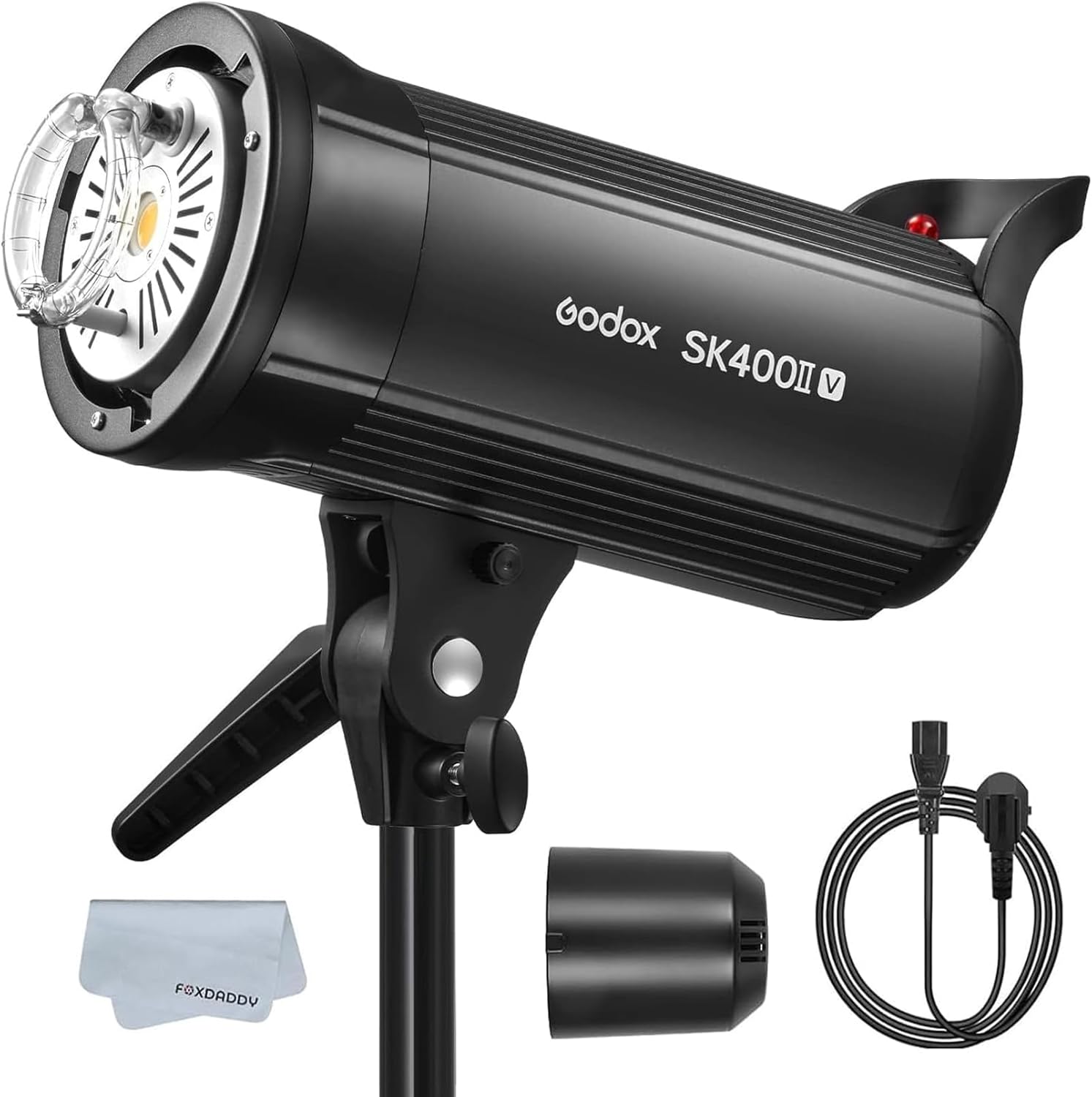
Godox SK400II Studio Flash Review: Budget Studio Strobe for Growing Photographers
The Godox SK400II delivers 400Ws of studio flash power with Bowens mount, built-in 2.4G X wireless receiver, and fast 0.

Jinbei HD-610 Flash Review: Powerful Battery-Powered Strobe for Location Shoots
The Jinbei HD-610 is a 610Ws battery-powered studio flash with LED modeling lamp, fast 0.05s recycle, and IGBT control.