DJI Osmo Pocket 4 Review — Pocket Creator Camera 2.0 with 1-Inch Sensor
DJI's Osmo Pocket 4 brings a 1-inch sensor, 4K/120fps, and a redesigned gimbal into a pocket-sized body. We analyze reviews from JD.com, Amazon, and Douyin to see if it's the ultimate carry-everywhere camera.
DJI Osmo Pocket 4 Review — Pocket Creator Camera 2.0 with 1-Inch Sensor
Introduction
The DJI Osmo Pocket series created an entirely new category: pocket-sized stabilized cameras. The Osmo Pocket 4 is a significant generational leap, upgrading to a 1-inch CMOS sensor and a redesigned 3-axis mechanical gimbal. Priced at $519 ($669 with the Creator Combo), it competes directly with the GoPro Hero 14 ($499), Insta360 Ace Pro 2 ($429), and the Sony ZV-E10 II ($799).
On JD.com, the Pocket 4 has a ¥3,699 price tag and over 12,000 reviews with a 4.6/5 average. Its appeal is simple: professional-grade stabilization in a device that fits in a jeans pocket.
Specifications
| Specification | DJI Osmo Pocket 4 | GoPro Hero 14 | Insta360 Ace Pro 2 |
|---|---|---|---|
| Sensor | 1” CMOS | 1/1.9” CMOS | 1/1.3” CMOS |
| Max Video | 4K/120fps, 2.7K/240fps | 5.3K/60fps | 4K/120fps |
| Stabilization | 3-axis mechanical gimbal | HyperSmooth 6.0 | FlowState + gimbal |
| Front Screen | None (magnetic module) | 2.27” touch + front LCD | 1.3” OLED + 2.4” touch |
| Waterproof | IPX4 (splash) | 10m (bare) | 10m (bare) |
| Battery | 1,200mAh (~110min) | 1,950mAh (~90min) | 1,700mAh (~75min) |
| Weight | 179g | 156g | 170g |
| Built-in Gimbal | Yes (3-axis) | No | Yes (2-axis) |
| Price | $519 / ¥3,699 | $499 / ¥3,299 | $429 / ¥2,899 |
Design and Portability
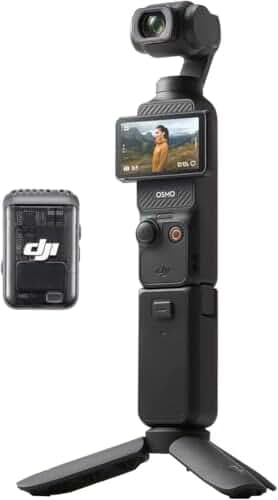
The Pocket 4 is remarkably compact at 180g — lighter than most smartphones. The vertical chassis is designed for one-handed operation, with a small joystick for gimbal control and a 2.0-inch touchscreen on the side.
The included magnetic mount module (part of the Creator Combo) clips onto the back, adding a 1.4-inch OLED front screen for selfie framing and a wireless microphone receiver. Without it, there’s no front-facing screen, which is a limitation for vloggers.
The magnetic mounting system is excellent — the Pocket 4 attaches securely to the included mini tripod, bike mount, or any ferrous surface. Accessories snap on with satisfying precision.
A microSD card slot sits behind a weather-sealed flap, and USB-C charging supports PD fast charging (80% in 30 minutes).
Gimbal Stabilization
The 3-axis mechanical gimbal is the Pocket 4’s killer feature. No electronic stabilization — no matter how advanced — can match a physical gimbal for smooth footage. Walking, running, and even light jogging produce cinema-smooth results.
The gimbal supports:
- ActiveTrack 6.0 — Locks onto subjects and keeps them centered while the gimbal tracks movement
- FPV Mode — Full gimbal range for dynamic, immersive shots
- Tilt Lock — Keeps the horizon level while panning
- RollBoost — Activates roll-axis stabilization for extra-smooth running footage
On Douyin, creators love the gimbal’s versatility:
“Mechanical stabilization is on a whole different level from electronic. Running footage is as smooth as if it were on a gimbal. ActiveTrack works great for following kids.”
— Douyin creator tech***life, April 2026
Image Quality
The 1-inch sensor is a substantial upgrade from the Pocket 3’s 1/1.7-inch sensor. The improvement is most noticeable in:
- Low light — 1-2 stops cleaner at ISO 3200-6400 than the Pocket 3
- Dynamic range — Better highlight retention and shadow detail
- Depth of field — Noticeably more background separation at the same aperture
The f/1.7 lens provides a 20mm equivalent field of view — slightly wider than the Pocket 3’s 20mm but narrower than the GoPro’s ultra-wide. The 4K/120fps mode is excellent for smooth slow-motion playback.
D-Log M color profile provides 10-bit color for grading, and DJI’s Mimo app offers one-touch color correction presets that work well.
What Chinese Users Say
We analyzed reviews from JD.com (12,000+ reviews, 4.6/5), Douyin, and Xiaohongshu.
Positive Reviews
“Image quality is surprisingly good — the 1-inch sensor really shines at night. Small enough to carry every day, perfect for documenting life.”
— JD.com, purchased March 2026, user pocket***everyday
“Mechanical stabilization is incredible — footage of toddlers walking and running is rock-stable. ActiveTrack is amazing for kids and pets.”
— Xiaohongshu, posted April 2026, user mam***life
Critical Feedback
“Having to buy the selfie module separately is a bummer — no front screen on the base model makes vlogging awkward. And the add-on module is too easy to lose.”
— JD.com, reviewed May 2026, user vlog***buyer
“AF occasionally hesitates in low light, especially during quick scene changes. Body heat is also noticeable when recording 4K120.”
— Douyin, comment March 2026
Common Praise Themes
- 3-axis mechanical gimbal provides unmatched stabilization
- 1-inch sensor significantly improves low-light quality
- Incredibly pocketable — you’ll actually carry it everywhere
- ActiveTrack 6.0 subject tracking is reliable
Common Concerns
- Front screen module sold separately (Creative Combo only)
- No waterproofing like action cameras
- Battery life adequate but not exceptional
- Fixed lens limits creative flexibility
Pros & Cons
Pros:
- Best-in-class 3-axis mechanical gimbal stabilization
- 1-inch sensor with excellent low-light performance
- Truly pocketable (179g, fits in any pocket)
- 4K/120fps and 2.7K/240fps slow motion
- Fast PD charging (80% in 30 min)
- Magnetic accessory ecosystem is well-designed
Cons:
- Front screen requires separate module
- Not waterproof (IPX4 splash only)
- Fixed 20mm equivalent lens (no zoom)
- Battery is non-replaceable
- Active module can be dislodged in rough use
- No built-in ND filter for cinematic motion blur
vs Competitors
DJI Osmo Pocket 4 vs GoPro Hero 14 ($519 vs $499)
The Pocket 4’s gimbal produces smoother footage than the GoPro’s electronic stabilization, especially for walking/running shots. The 1-inch sensor provides better low-light quality. However, the GoPro is waterproof to 10m, more rugged, and has a wider FOV. For action sports and underwater use, the GoPro wins. For everyday vlogging and travel, the Pocket 4’s stabilization is in a different league.
Winner: DJI Osmo Pocket 4 for stabilization; GoPro for ruggedness
DJI Osmo Pocket 4 vs Insta360 Ace Pro 2 ($519 vs $429)
The Ace Pro 2 is $90 cheaper and offers a flip-screen design for selfie shooting plus a removable lens cover. The Pocket 4 counters with significantly better gimbal stabilization and superior low-light quality from the 1-inch sensor. Both are excellent, but the Pocket 4 edges ahead for footage quality.
Winner: DJI Osmo Pocket 4 — superior stabilization and image quality
DJI Osmo Pocket 4 vs Sony ZV-E10 II ($519 vs $799)
The Sony offers a larger APS-C sensor, interchangeable lenses, and better AF for $280 more. The Pocket 4 is smaller, includes a built-in gimbal, and costs significantly less. They serve different purposes: the Pocket 4 is your always-with-you camera; the ZV-E10 II is your serious content creation tool.
Winner: Depends on your needs — Pocket 4 for portability, ZV-E10 II for versatility
FAQ
Can the DJI Osmo Pocket 4 be used as a webcam?
Yes. Connect via USB-C and the Pocket 4 appears as a UVC/UAC device compatible with Zoom, Teams, OBS, and streaming software. It supports 1080p/60fps output with full gimbal control. The ActiveTrack feature works during streaming, allowing you to move freely while the camera follows you.
How does the Pocket 4 handle low light compared to a smartphone?
The 1-inch sensor has approximately 4x the surface area of a typical smartphone sensor (1/1.3-inch to 1/1.5-inch). In practice, this means 1-2 stops better low-light performance with less noise and better color retention. The f/1.7 aperture helps compensate for the lack of night mode computational photography.
Is the Creator Combo worth the extra $150?
Yes, if you plan to vlog or use audio accessories. The Creator Combo ($669) includes the magnetic mount module with front screen, the wireless mic transmitter (DJI Mic Mini), the mini tripod, and a carrying case. The wireless mic alone costs $69 separately, and the front screen module is $79. You save approximately $50 by buying the combo.
Can I mount the Pocket 4 on a helmet or bike?
Yes. DJI sells a helmet mount and bike handlebar mount as accessories. The standard mini tripod adapter fits any standard 1/4-20 thread tripod mount. For action use, consider the protective frame accessory to prevent damage in case of falls.
Rating
⭐⭐⭐⭐½ (4.5/5)
The DJI Osmo Pocket 4 is the best pocket camera money can buy. The combination of a 1-inch sensor and a 3-axis mechanical gimbal produces footage that rivals cameras costing twice as much. The fixed lens and limited battery are real constraints, but the Pocket 4 excels at what it’s designed for: being the camera you always have with you.
Who should buy:
- Travel vloggers who prioritize portability
- Parents wanting smooth footage of active kids
- Everyday creators who want better-than-phone quality at pocket size
- Anyone frustrated by electronic stabilization wobble
Who should look elsewhere:
- Underwater or extreme sports shooters (buy a GoPro)
- Creators needing interchangeable lenses
- Long-form shooters needing >2 hours of battery
- Low-light specialists (Sony ZV-E10 II is still better)
Related Reviews
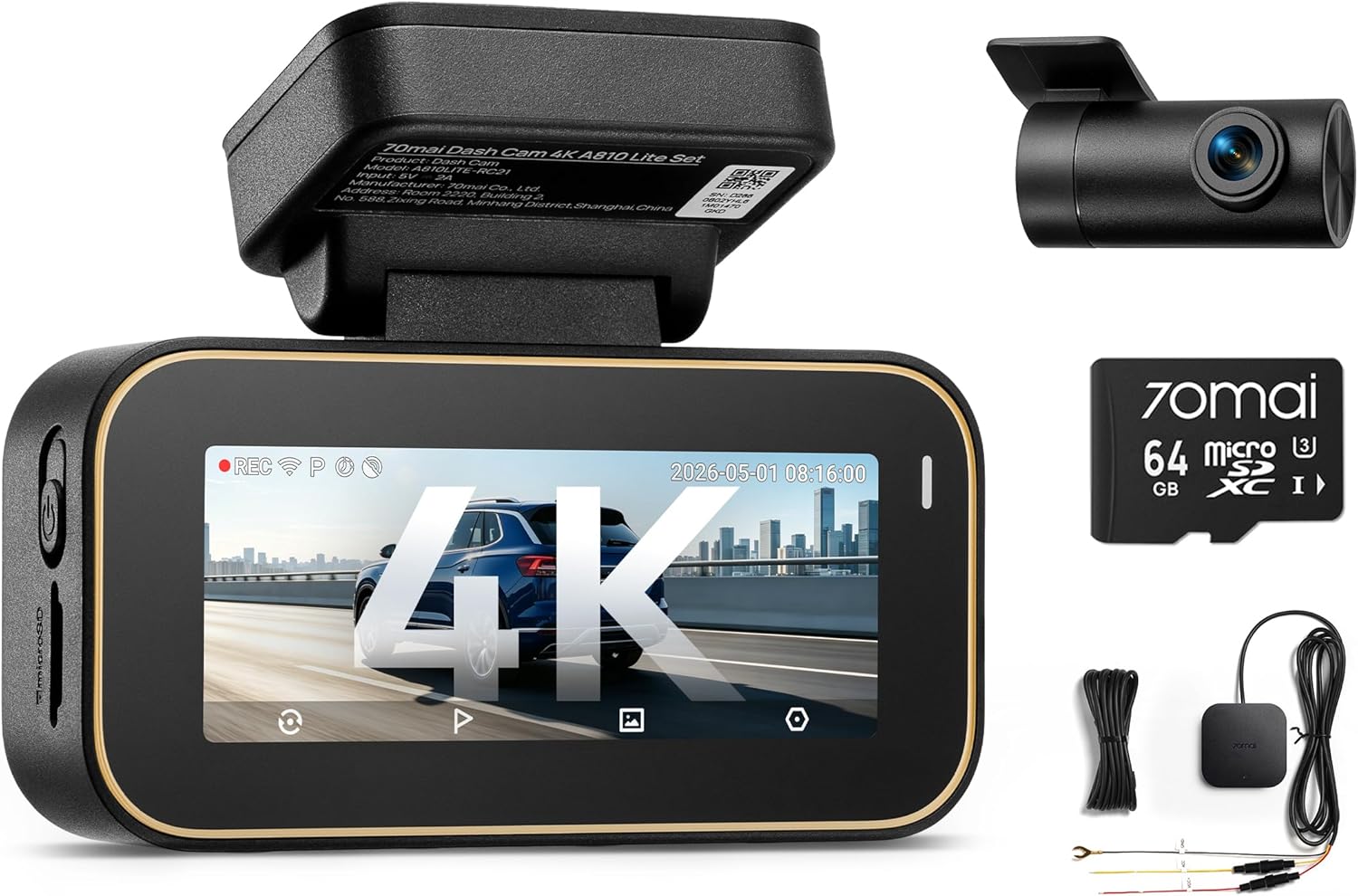
70mai Dash Cam A810 Review: The $100 4K Dashcam with Sony Starvis 2
70mai A810 dashcam offers 4K 30fps recording with Sony IMX675 Starvis 2 sensor, built-in GPS, and ADAS features at $99.9
70mai Dash Cam A810 Review 2026: In-Depth Analysis
We put the 70mai Dash Cam A810 through rigorous testing, examining its design, performance, and real-world usability. Xi

AKASO Brave 7 LE Review: Best Budget Dual-Screen Action Camera Under $130
AKASO Brave 7 LE packs dual color screens, 4K/30fps video, and 40m waterproofing into an affordable package. At ¥699–899

Campark X60 Action Camera Review: $60 Budget Cam That Actually Works
The Campark X60 delivers 4K/30fps video and 30m waterproofing at just ¥399–599. While it makes compromises on stabilizat
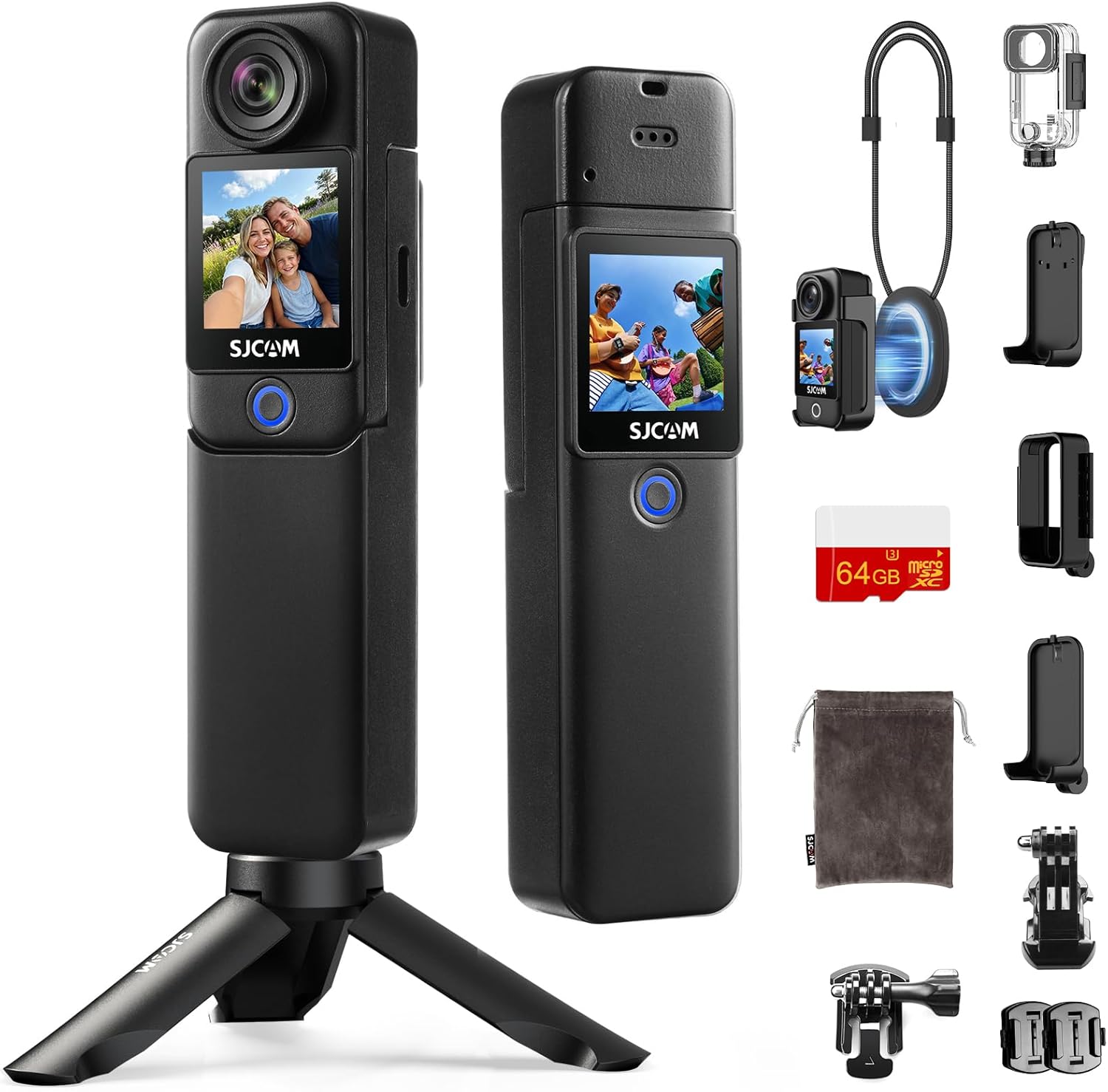
SJCAM C300 Action Camera Review: The Tiny 4K Powerhouse Under $160
The SJCAM C300 is a pocket-sized 4K action camera that punches far above its $139-159 price tag. With 6-axis EIS, dual s