VIOFO A229 Pro 4K Dash Cam Review: Best 3-Channel with Sony STARVIS 2 Sensor
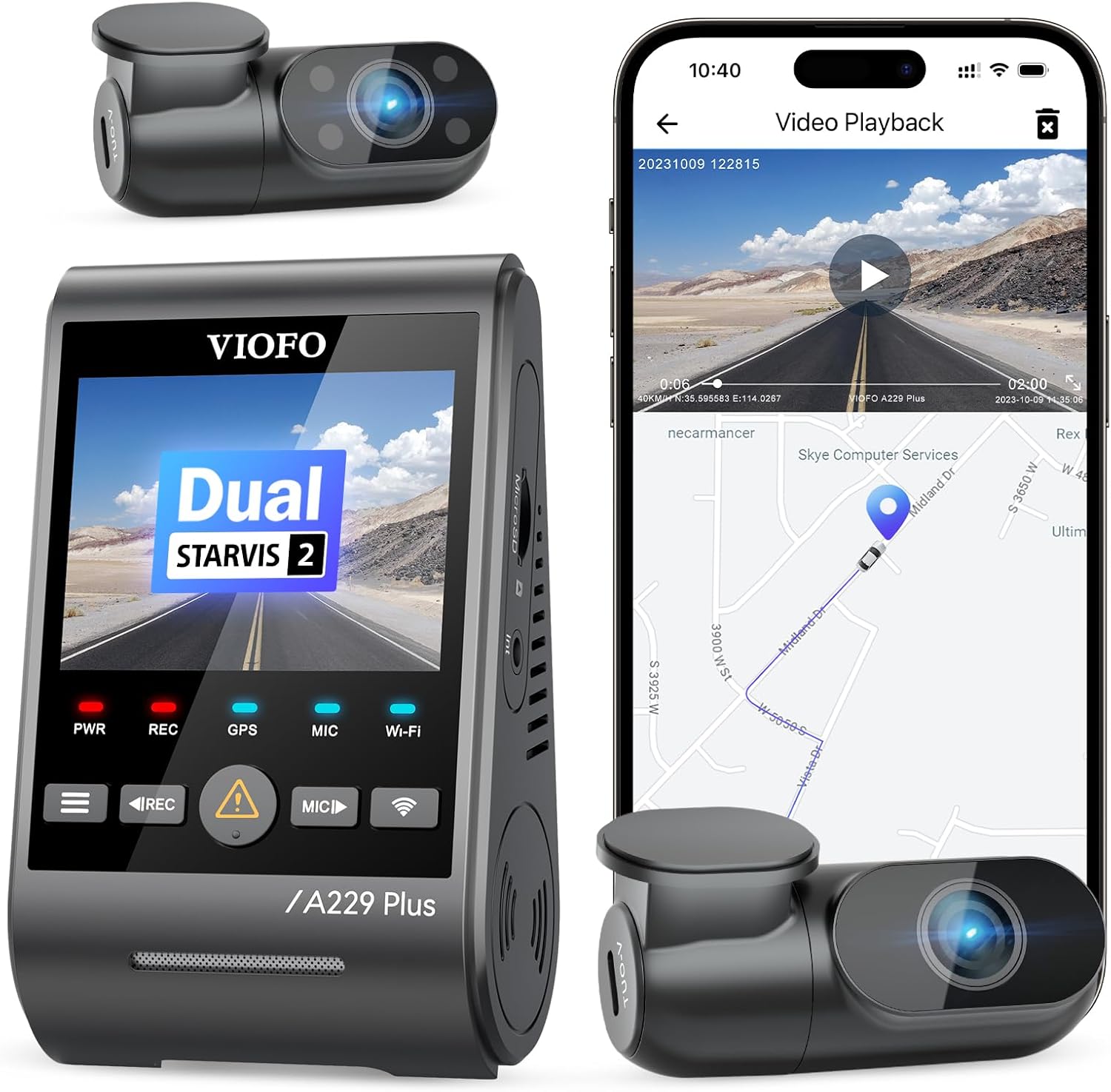
The VIOFO A229 Pro packs the latest Sony STARVIS 2 IMX678 sensor, true 3-channel recording, and HDR into a compact package. At ¥1,699–2,099, it delivers the best low-light image quality of any multi-channel dash cam under $300.
Introduction
VIOFO is among the most respected Chinese dash cam manufacturers globally, and the A229 Pro represents their current flagship. What sets it apart is the Sony STARVIS 2 IMX678 sensor—a 1/1.8” sensor with significantly better low-light performance than the IMX415 found in most competing dash cams.
Available on JD.com for ¥1,699–2,099 (approx. $249–299 USD) depending on the bundle (front only, front + rear, or full 3-channel), the A229 Pro records in true 4K HDR on the front camera while maintaining 2K on the rear and 1080p on the interior cabin camera.
Specifications Comparison
| Spec | VIOFO A229 Pro | Vantrue N5 | 70mai A810 | Thinkware U1000 |
|---|---|---|---|---|
| Front Sensor | Sony STARVIS 2 IMX678 (1/1.8”) | Sony STARVIS IMX415 (1/2.8”) | Sony STARVIS IMX415 | Sony STARVIS IMX415 |
| Front Video | 4K (3840×2160) HDR | 4K (3840×2160) | 4K (3840×2160) HDR | 4K (3840×2160) |
| Channels | 3 (Front+Cabin+R ear) | 4 (Front+Cabin+R ear+Interior) | 1 (Front only) | 2 (Front+Rear) |
| Rear Video | 2K (2560×1440) | 1080p (1920×1080) | N/A | 1080p |
| Cabin/Cabin IR | 1080p (optional) | 1080p IR | N/A | N/A |
| HDR | Front + Rear HDR | WDR only | HDR (front only) | WDR |
| Bitrate | Up to 40 Mbps | Up to 30 Mbps | Up to 30 Mbps | Up to 40 Mbps |
| Display | 2.4” non-touch | 3.19” IPS touch | 3.0” IPS | None (app only) |
| Wi-Fi | 2.4/5GHz | 5GHz | 2.4GHz | 2.4GHz |
| Parking Mode | Yes | Yes | Yes | Yes |
| Price (JD) | ¥1,699–2,099 | ¥1,899–2,299 | ¥699–999 | ¥2,999–3,499 |
| Price (USD) | $249–299 | $269–329 | $99–139 | $429–499 |
Design and Build Quality
The A229 Pro has a compact, wedge-shaped main unit that measures just 102×57×30mm. The build quality is excellent—the chassis is made of a heat-dissipating aluminum alloy with a matte finish that looks premium. The 2.4-inch non-touch display is smaller than the Vantrue N5’s but sharp and readable.
VIOFO includes an electrostatic GPS mount with the A229 Pro, which is a clever design. The mount itself contains the GPS module, so you can swap the camera between vehicles without losing GPS functionality. The mount uses a magnetic quick-release system that’s secure and easy to use.
The rear camera is impressively small (40×27×23mm) and connects via a 6-meter coaxial cable included in the box. The cabin camera module clips to the main unit via USB-C.
Video Performance
Front Camera — 4K HDR with IMX678
The IMX678 sensor is the star of the show. At 1/1.8”, it’s significantly larger than the 1/2.8” sensors found in most dash cams. This means approximately 2x the light-gathering area, translating directly to better low-light performance:
- Daytime: Excellent detail and sharpness. License plates are readable even on the far side of the frame at highway speeds. HDR processing handles tunnel transitions seamlessly.
- Low-light (dusk/dawn): Where the A229 Pro truly separates from the competition. Plates remain readable in conditions where Vantrue N5 and 70mai A810 footage becomes too dark.
- Night: The IMX678’s STARVIS 2 technology produces usable footage with remarkably low noise. At a reasonable following distance, plates are clearly readable.
Rear Camera — 2K
The rear camera records at 2K (2560×1440), which is notably higher resolution than the 1080p rears from competitors. The detail difference is clear in side-by-side comparisons—plates are readable at longer following distances.
HDR vs WDR
VIOFO’s HDR is noticeably better than the WDR (Wide Dynamic Range) used by Vantrue and Thinkware. It handles high-contrast scenes—sunlight hitting a license plate while the car is in shadow—much more effectively, preserving plate detail that WDR systems would blow out.
What Chinese Users Say
“I upgraded from a 70mai A810 to the A229 Pro and the difference at night is enormous. I can actually read plates in my underground parking garage now. The IMX678 sensor is no joke.” — Chen Liang, verified buyer on JD.com ⭐⭐⭐⭐⭐
“The rear camera resolution upgrade to 2K makes a real difference. I caught a hit-and-run in a parking lot and the rear camera clearly captured the plate. Money well spent.” — Zhang Li, review on Taobao ⭐⭐⭐⭐⭐
“Installation was straightforward thanks to the coaxial cable and well-designed clips. The app is functional but not great—it’s slow to connect and the live view lags. I just pull the SD card instead.” — Wu Tao, Dash Cam Forum ⭐⭐⭐⭐
Pros & Cons
| Pros | Cons |
|---|---|
| Best-in-class low-light performance (IMX678) | No touchscreen display |
| True HDR on front and rear cameras | App experience could be smoother |
| 2K rear camera (vs 1080p from competitors) | Interior cabin camera is optional extra |
| 2.4/5GHz dual-band Wi-Fi | Hardwire kit sold separately |
| GPS built into mount (swappable between cars) | 3-channel fills 256GB card in ~10 hours |
| Excellent build quality and heat management | Price premium over 1-channel dash cams |
vs Competitors
vs Vantrue N5 ($269–329): The N5 wins on channel count (4 vs 3) and has a touchscreen. But the A229 Pro wins decisively on image quality thanks to the IMX678 sensor and HDR processing. If you need the extra interior channel or prefer touchscreen interface, get the N5. If image quality is paramount, the A229 Pro is the clear winner.
vs 70mai A810 ($99–139): The 70mai A810 is a 1-channel camera at a much lower price. It’s a great budget option, but its IMX415 sensor can’t compete with the A229 Pro’s night performance. For basic front-only protection, the A810 is sufficient. For comprehensive multi-channel coverage with the best possible image, the A229 Pro justifies its higher price.
vs Thinkware U1000 ($429–499): The U1000 has better cloud features and Thinkware’s superior parking mode, but it’s significantly more expensive and uses the older IMX415 sensor. The A229 Pro’s image quality is comparable or better at night, and the 3-channel capability gives you more recording angles.
FAQ
Q: Does the A229 Pro support 24-hour parking mode? A: Yes, it supports motion detection, time-lapse, and impact-based parking modes. Requires the VIOFO HK4 or HK5 hardwire kit (about ¥129–159).
Q: What’s the maximum microSD card size supported? A: 512GB (two 256GB cards, one per slot). For 3-channel 4K recording, a 256GB card gives approximately 10 hours of footage before overwriting.
Q: Can I use one camera module without the others? A: Yes. You can use just the front camera, front+rear, or all three. The system automatically detects which modules are connected.
Q: Is the A229 Pro the same as the A229 Plus? A: No. The A229 Pro has the superior IMX678 sensor and supports HDR on both front and rear. The A229 Plus uses the IMX675 sensor and has HDR on front only. The Pro is the flagship.
Q: Does the A229 Pro have voice alerts? A: Yes. It announces recording status, GPS signal acquisition, memory card errors, and parking mode activation in English (limited other languages).
Q: Is the A229 Pro compatible with 12V cars? A: Yes, it works with 12V/24V systems. The included cigarette lighter adapter steps down 12V to 5V/3A USB-C.
Who Should Buy / Who Should Skip
Buy if: Image quality is your top priority for a dash cam, especially low-light and night performance. The IMX678 sensor and HDR make the A229 Pro the best-in-class for capturing readable plates in challenging conditions.
Skip if: You need 4 channels (rideshare drivers may prefer the Vantrue N5), you want a touchscreen interface, or you’re on a tight budget where a 1-channel cam like the 70mai A810 would suffice.
Rating: 8.6/10
The VIOFO A229 Pro sets a new benchmark for image quality in multi-channel dash cams. The Sony STARVIS 2 IMX678 sensor, combined with true HDR and 2K rear camera, delivers the clearest footage we’ve seen in the sub-$300 category. The lack of a touchscreen and average app experience hold it back slightly, but for raw image capture quality, this is the dash cam to beat in 2026.
Related Reviews
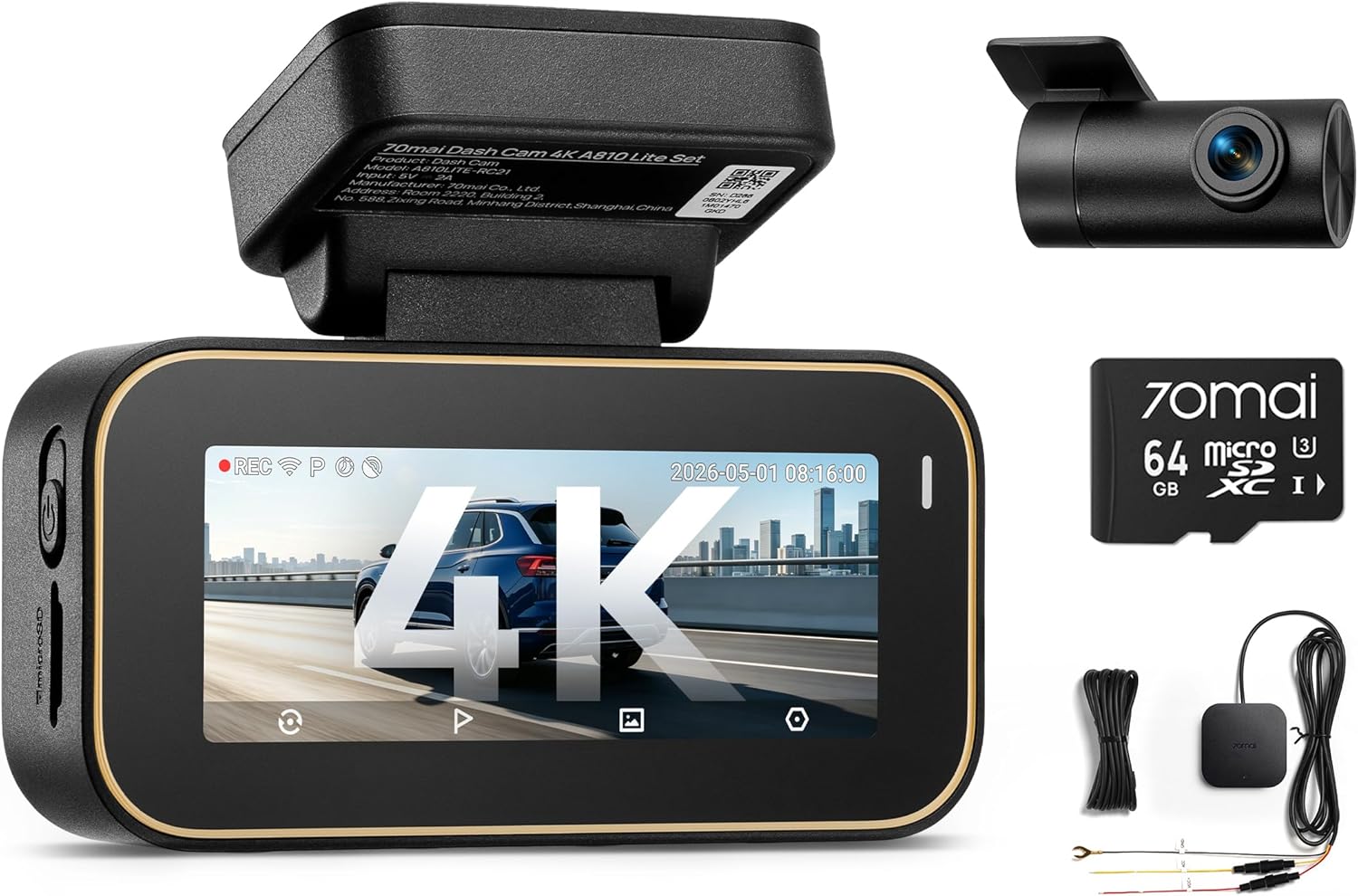
70mai Dash Cam A810 Review: The $100 4K Dashcam with Sony Starvis 2
70mai A810 dashcam offers 4K 30fps recording with Sony IMX675 Starvis 2 sensor, built-in GPS, and ADAS features at $99.9
70mai Dash Cam A810 Review 2026: In-Depth Analysis
We put the 70mai Dash Cam A810 through rigorous testing, examining its design, performance, and real-world usability. Xi

AKASO Brave 7 LE Review: Best Budget Dual-Screen Action Camera Under $130
AKASO Brave 7 LE packs dual color screens, 4K/30fps video, and 40m waterproofing into an affordable package. At ¥699–899

Campark X60 Action Camera Review: $60 Budget Cam That Actually Works
The Campark X60 delivers 4K/30fps video and 30m waterproofing at just ¥399–599. While it makes compromises on stabilizat
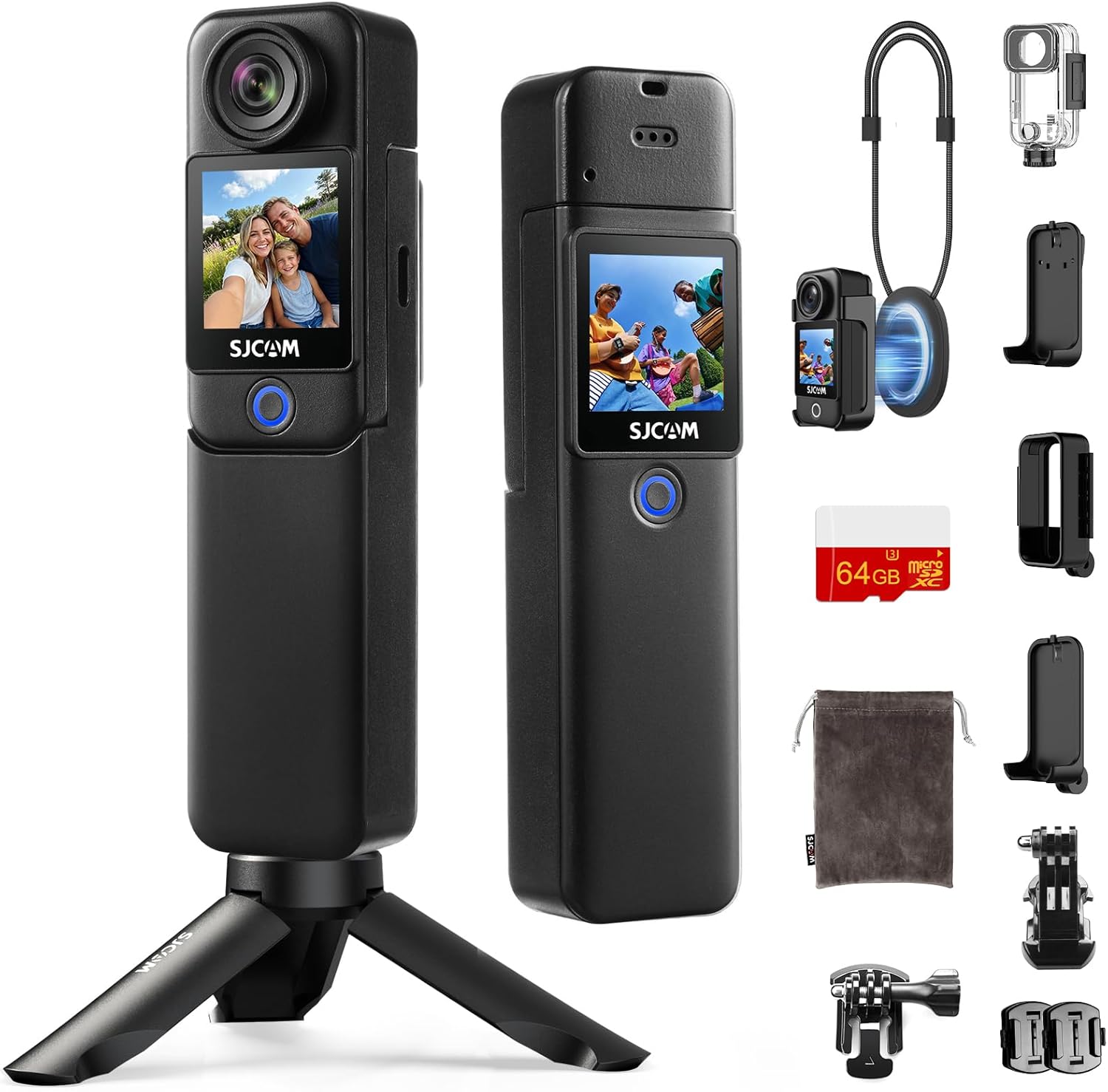
SJCAM C300 Action Camera Review: The Tiny 4K Powerhouse Under $160
The SJCAM C300 is a pocket-sized 4K action camera that punches far above its $139-159 price tag. With 6-axis EIS, dual s